One population of Monarch butterflies overwinters on California’s central coast, including here in Santa Cruz. The life cycle of these creatures is extraordinary. The ones arriving now were spread all over southwestern Canada, the US Pacific Northwest, and the Rocky Mountains until cooling weather inspired them to fly here for winter. They will start to spread north and east again in February or March, traveling 2 to 6 weeks before stopping to lay eggs, then dying. From those eggs, Generation 1 will hatch in April and May, fly 2 to 6 weeks, lay eggs and die. Generation 2 will repeat, as will Generation 3. Generation 4, however, will sense the weather change and fly to California, living 6 or 7 months total, completing a journey started by their great-great-grandparents.
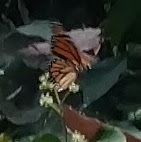
The butterfly grove I visited is inspiring even early in the season, with only a couple of hundred Monarchs in residence. Or it would be. It mostly was. But for about 20 minutes, a small group was noisy, talking on cell phones, gossiping about work, allowing their children to run and shout. Even if you don’t read the signs about using your “butterfly voice”, doesn’t a viewing platform a quarter-mile walk into the woods, surrounded by vines and trees aflutter, naturally induce calm reflection? Especially when populated by parents whispering to children and adults observing silently, with occasional comments made sotto voce. Clear signals of discomfort were sent by many, but the noisy group was clueless.
What sort of people do this?–even asking that question implies stereotyping. This is a state park; should everybody be allowed to use it for their own purposes, or are some purposes “higher” than others? If those who aren’t naturally drawn to nature are shunned or banned, will that affect voter support for government funding to maintain such areas? Most important, is it even possible for those of us who love nature to explain to, or share with, or introduce the joy of reflective observation to those who just need to unwind after another difficult day at a tedious job?
That it may not be possible, that these divides are insurmountable, is of course the question of this moment in our society. I’m slowly reading a difficult book, “White Trash,” a history of the US which chronicles how working people have been excoriated and demonized by the middle class as well as the wealthy throughout our history for their quite different “take” on life. The current election campaign brings this into sharp relief, with ample daily examples demonstrating that a great many Americans don’t have many views in common with a great many other Americans. A piece in this week’s New Yorker about West Virginia tries to bridge the gap by exploding stereotypes, but founders when explaining some specific views, which I feel will be stereotype-reinforcing for many readers.
Most of us are friendly with people with whom we don’t always agree , and manage to get along by not discussing specifics. Avoidance is not a method for creating public policy though, and I fear Americans don’t agree on what matters in a profound way. If someone suggested music or food stands at the butterfly refuge, I would fight that, not seek a compromise. Intransigence shows up on all sides.
 Culminating Triad