My 2017 resolution is No Factoids. Norman Mailer coined the word, and defined it as a falsehood that is believed to be true after publication or repetition. I prefer Bradford Veley’s definition, though: A nugget of truthiness nestled in a swirl of rumors, often with a sweet coating. I’m resolved to neither propagate nor accept factoids.
Fact (a true piece of information): Triclosan is an antibacterial agent found in Colgate Total toothpaste.
This toothpaste changed the lives of our family when we discovered it, especially that of my nephew, who was living with us at the time. When he arrived at the start of sixth grade, his teeth were demineralized and one unerupted adult tooth was rogue in his gums. These deficits were eventually corrected, but he still had poor dentist reports and frequent cavities, which made his aunt unhappy with him.
Our family switched to Colgate Total after our dentist started handing it out. Soon, my nephew was getting the oral exam results the rest of us did, even with relatively sporadic use. After several surprisingly short cleaning appointments, I permanently reduced my own brushing and flossing frequency, with no apparent ill effect.
I visited my west coast dentist for the first time on November 22, and he gave me a sample of Crest. After confirming that it did not contain triclosan, I threw it away without even recycling the box. I was offended. Why wouldn’t he offer his patients the most advanced toothpaste? I didn’t think about it again until the relative calm between Christmas and New Year’s, at which point I decided to investigate.
If you had asked me about Total last fall, I would have said that it included the first major toothpaste breakthrough since fluoride, nearly 50 years ago; that no other toothpaste had the ingredient because it was still patented; and that some dentists were predicting it would reduce or remove the need for cleanings.
These are factoids. Triclosan wasn’t a new, patented discovery, just newly applied to toothpaste. It was acclaimed by some and shunned by others due to controversy, including fear it might disrupt the microbial balance in the mouth. Recently it was banned from uses in surgical and household cleaning by the FDA due to possible hormonal effects. It may be bad for aquatic organisms when it eventually ends up in the environment. The closest thing to a triclosan fact in my memory was how well it performed in oral health studies: the FDA still permits it for use in toothpaste because the benefits outweigh the costs.
I don’t know where I got the factoids in the first place, but I do know they were reinforced in my mind by repetition over the years, and also by the anecdotal evidence of my experience. This was a great lesson for me in how people can be convinced something is true when it isn’t.
Now I need to replace factoids with facts. I will ask my dentist. I will research some place other than the web, where the publicly available drug information is simple, and therefore incomplete. But facts exist, and I know I can find them. Zero Tolerance for factoids!
================================================================
News flash: During the last week of 2016, I finally saw a banana slug in the wild!
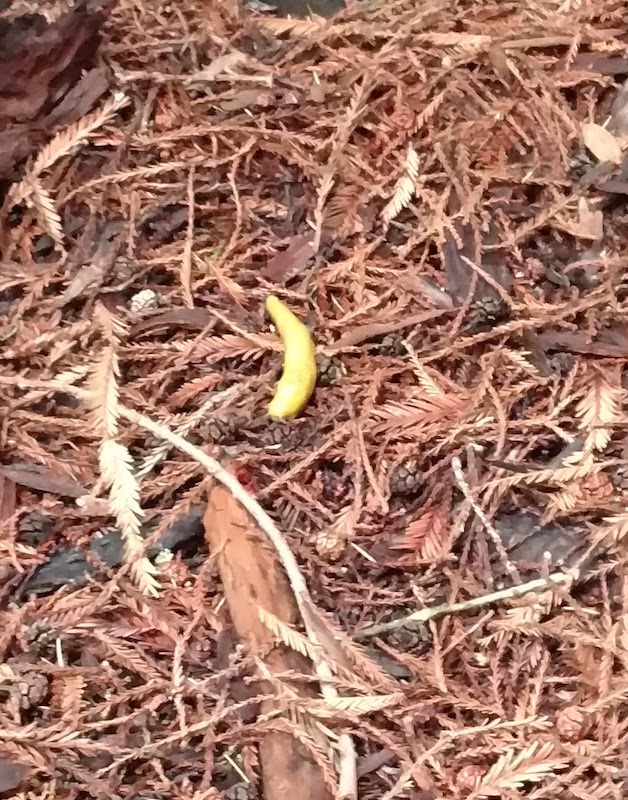
 Culminating Triad