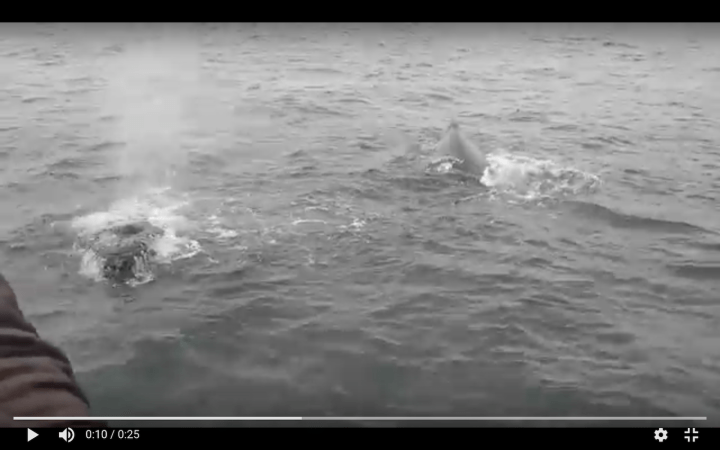
We went on a whale watch with our son and his girlfriend while they visiting in August. Every whale watch is different. This one was on the low side of number of whales spotted: only two, a humpback mom and her largish calf. The reason the boat lingered for over an hour nearby was that these whales kept coming very, very close, yielding some great views. This blurry one is a frame from a video. The whale on the right had just breathed, and the one on the left is in the process of doing so.
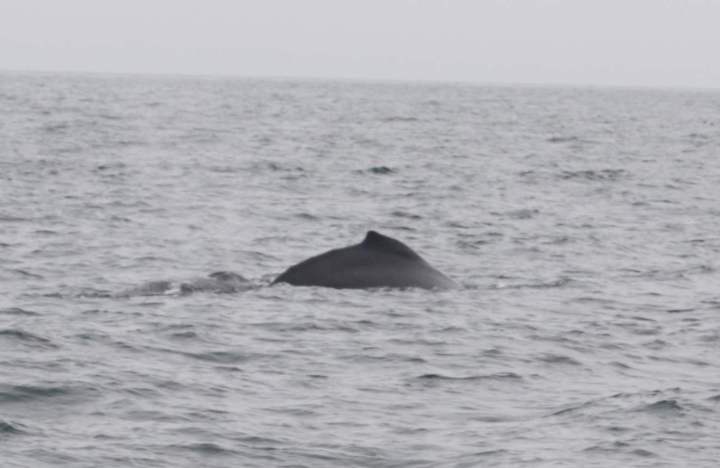
All the rest of the pictures are stills shot with a digital camera not on a phone, and show one whale only, though perhaps not always the same one. This characteristic pose showing the dorsal fin is the source of the name humpback.
In this one, you can clearly see the double blowhole characteristic of baleen whales.
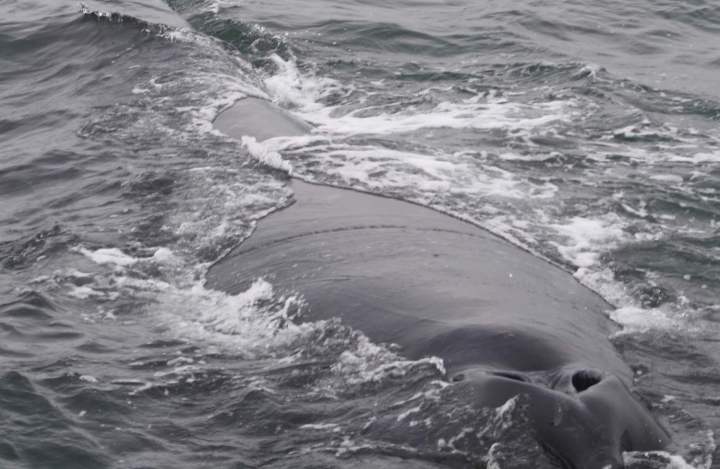
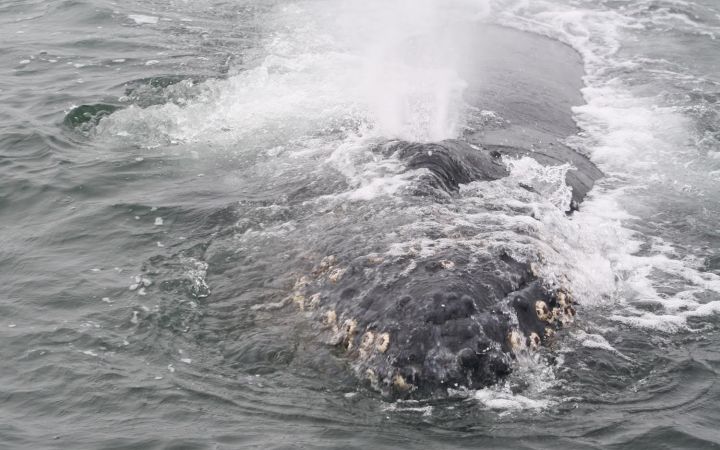
Here is the head, showing some of the barnacles. A humpback may carry 400 kg of barnacles, each perhaps 8 cm in base diameter. The baleen hangs from the upper jaw. Centered in the powerful lower jaw is a relatively-recently discovered sensory organ used to position the jaw and deploy the throat pouch during lunge feeding. I just read about it in Nick Pyenson’s Spying on Whales.
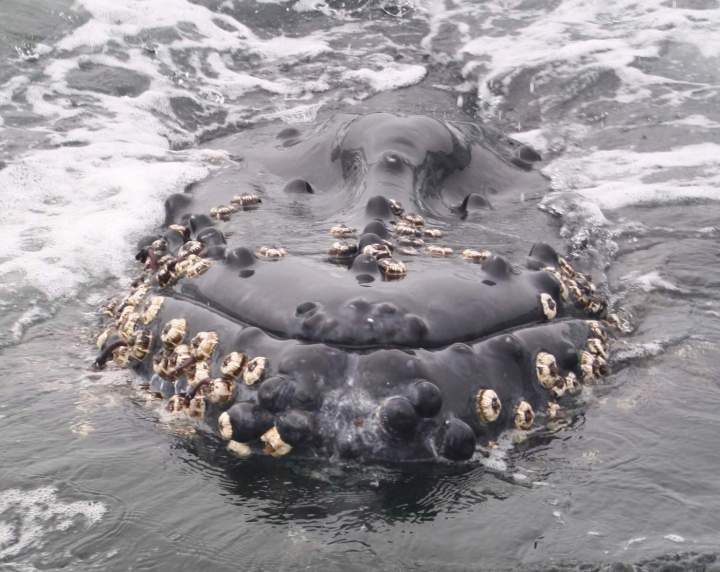
I call this next shot Snout and Spout, though I shouldn’t. While the whale’s rostrum and jaw remind me of the snout of a dog or alligator in terms of shape, the blowhole is the closest thing to a nose.
Whether whales are breaching or just checking out the boat, they never fail to fascinate me.
 Culminating Triad