Our first eleven days in Barcelona were slow with respect to visitors. After that, we scheduled three consecutive couples staying six, five, and four days. We’re in the midst of that now, and I have not any time to blog. Too busy having fun! After today, I may not get another chance until I’m home in California.
I do have a little time this afternoon though, so I’m going to write about the Gaudi edifice mentioned in the title. This one I found truly impressive, the most fanciful and creative of all the ones I plan to see on this trip. It’s a single-family home with a theme of marine life and an interior composed of wood, tile, and stucco arranged in a series of nature-mimicking curves. In addition to being beautiful, it is well-engineered and ergonomic.
All the words in the world can’t do it justice, and I was so stunned I didn’t take a lot of pictures, so I’m hoping these few will help you imagine the rest. Let’s start in the dining room, looking at the ceiling.
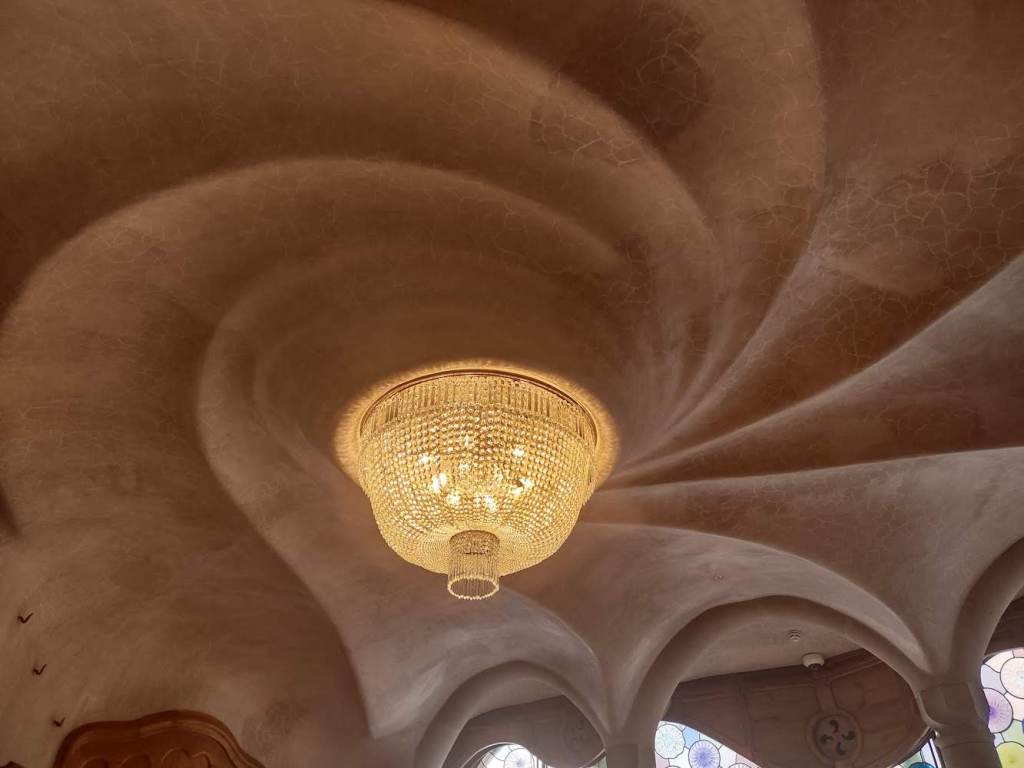
Next is the door entering the dining room from from the study. Notice the texture of the walls. The tri-fold wooden door makes a perfect seal with the complex shape above the opening.

This is the front window of the dining room looking out onto the main street. Keep that marine environment theme in your mind. Also notice the crowds; this is a popular site, though hardly Gaudi’s most popular. There are latches between the lowest windows and those above them, shown in the second shot below.
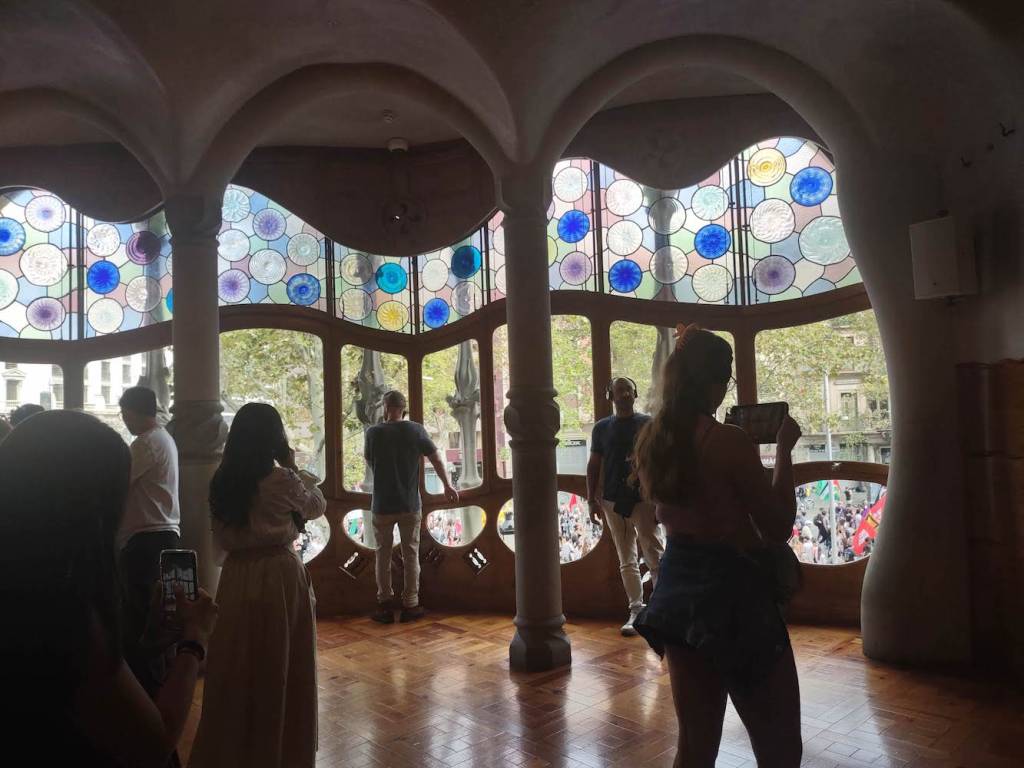
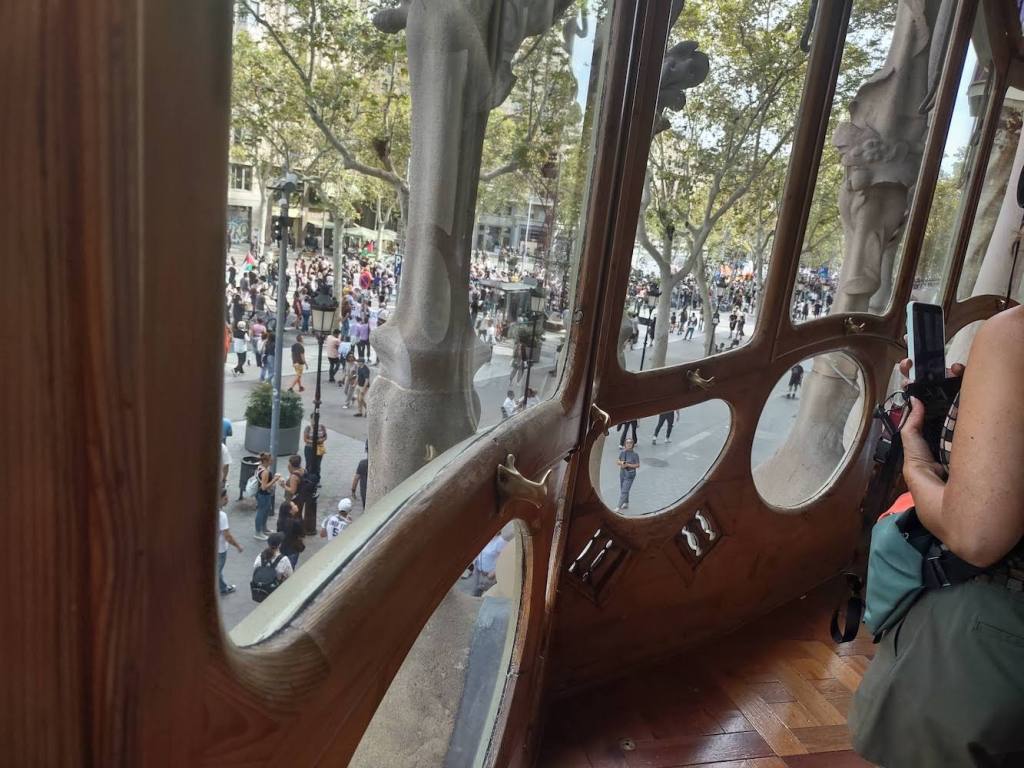
This window can become a balcony! First open all the latches roughly at waist level across the entire opening, then find a hinged, vertical panel at your left which conceals a lever. That moves the upper windows in some manner–we did not see this done–leaving the lower portion with the latches now serving as the railing to an open balcony.
Your many notice the street Passeig de Gracia, is particularly crowded. This was October 6, and there was another large free Palestine demonstration, the second we’ve seen.
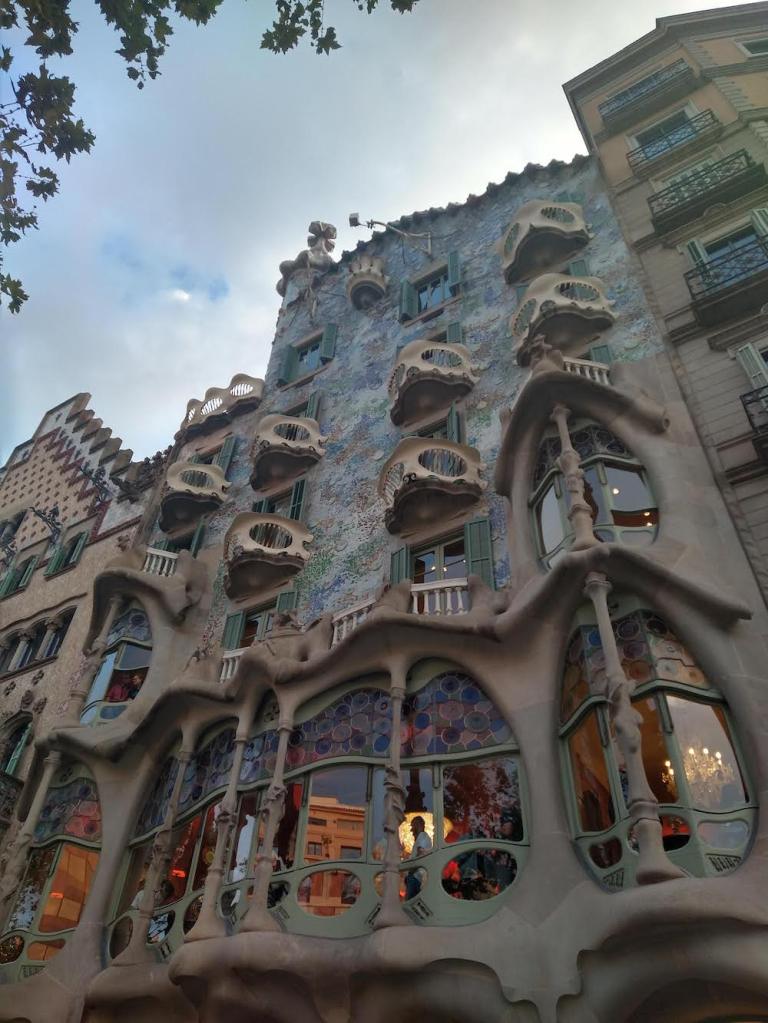
Finally I will reveal the facade. The configurable balcony would open the upper part of the middle of the second story, which is the lowest level shown in this shot. Also notice the serrated wall at the top which forms a dragon’s back. You’ll see the other side of that later.
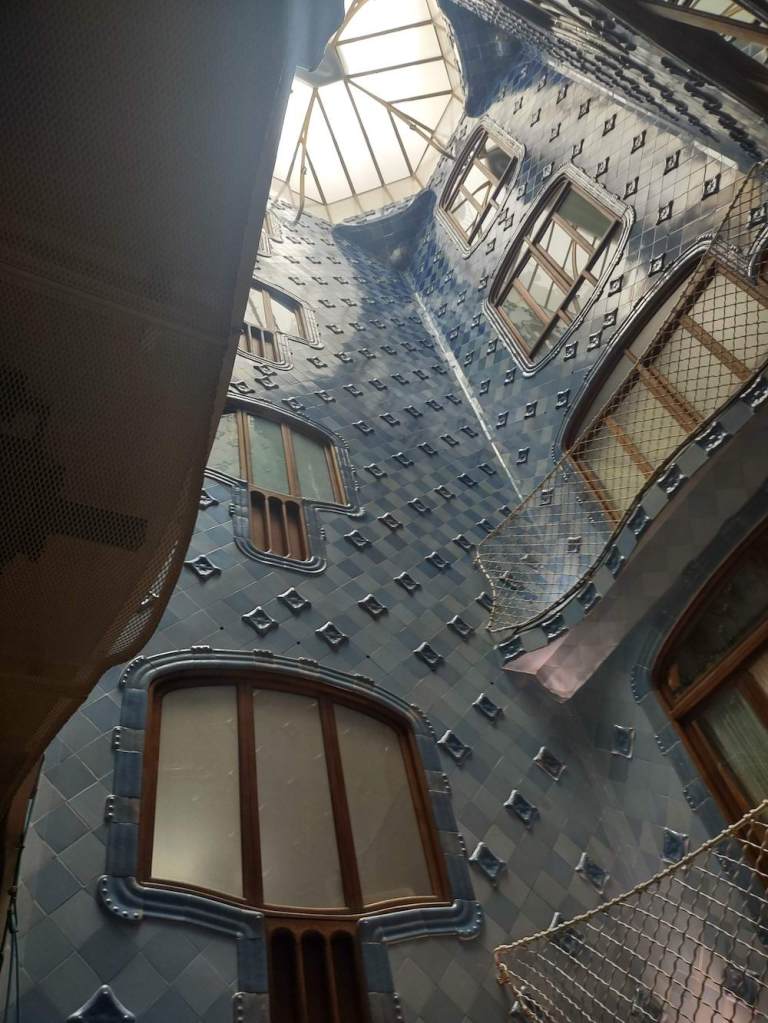
Now for a few random glimpses. There are two ground to roof openings to circulate light and air, which fill the entire structure wonderfully. Those shafts look like this from the inside.
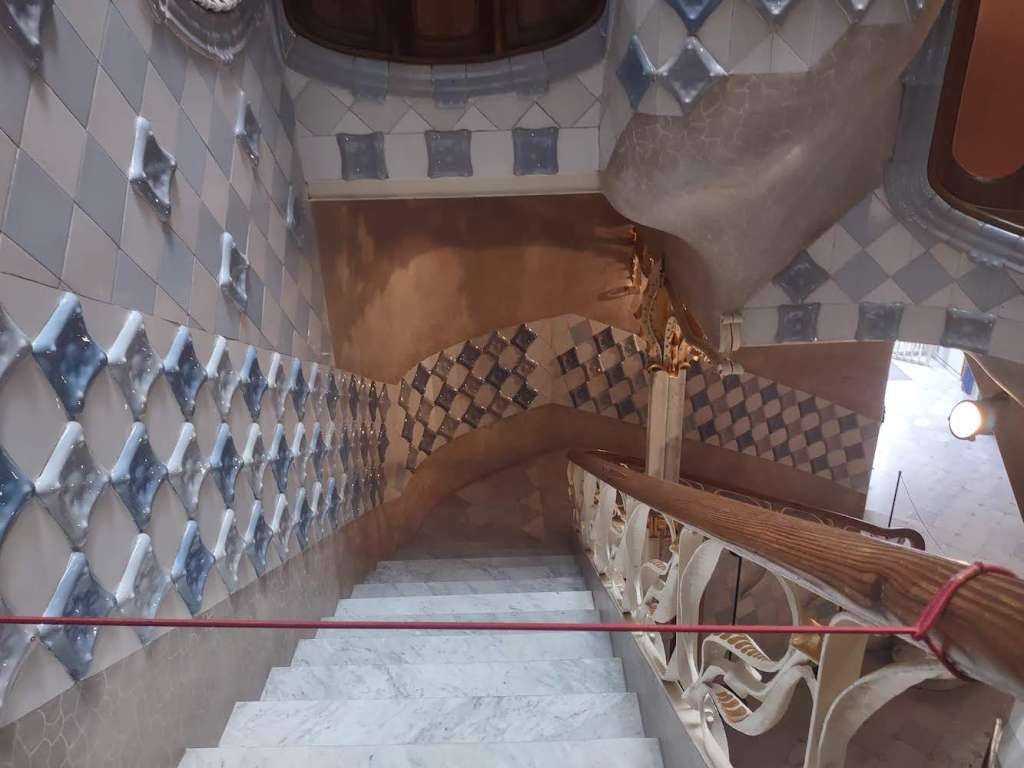
There are some gorgeous stairwells of many different designs. Here’s one.
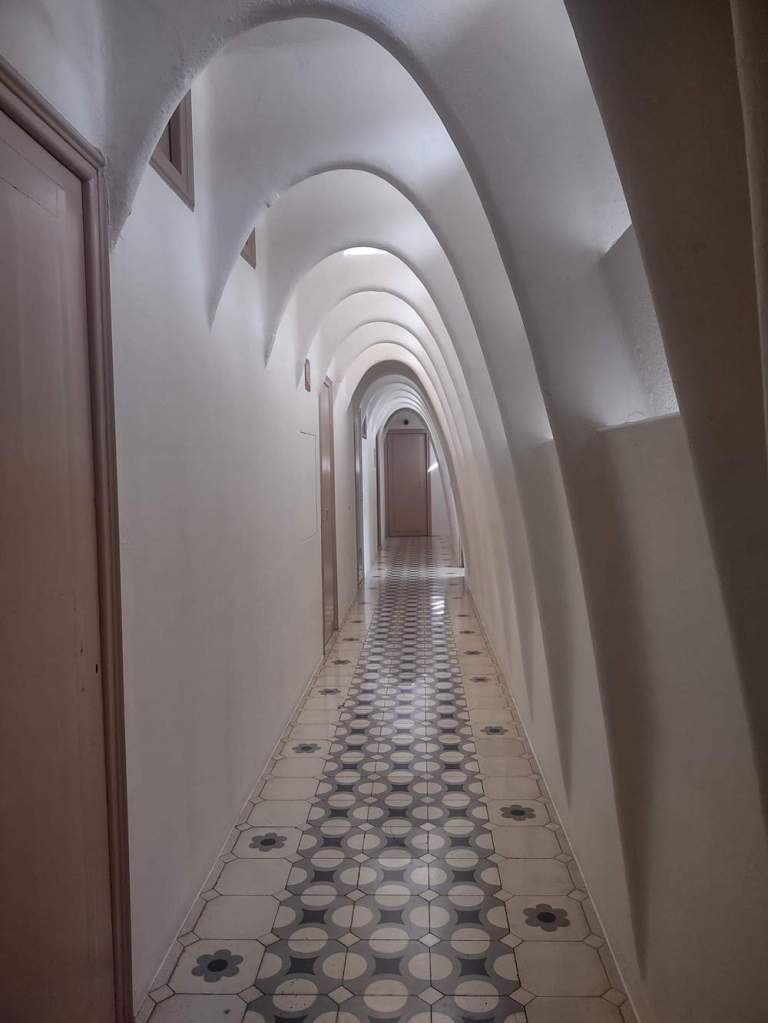
Even the simplest features seem fluid and biological.

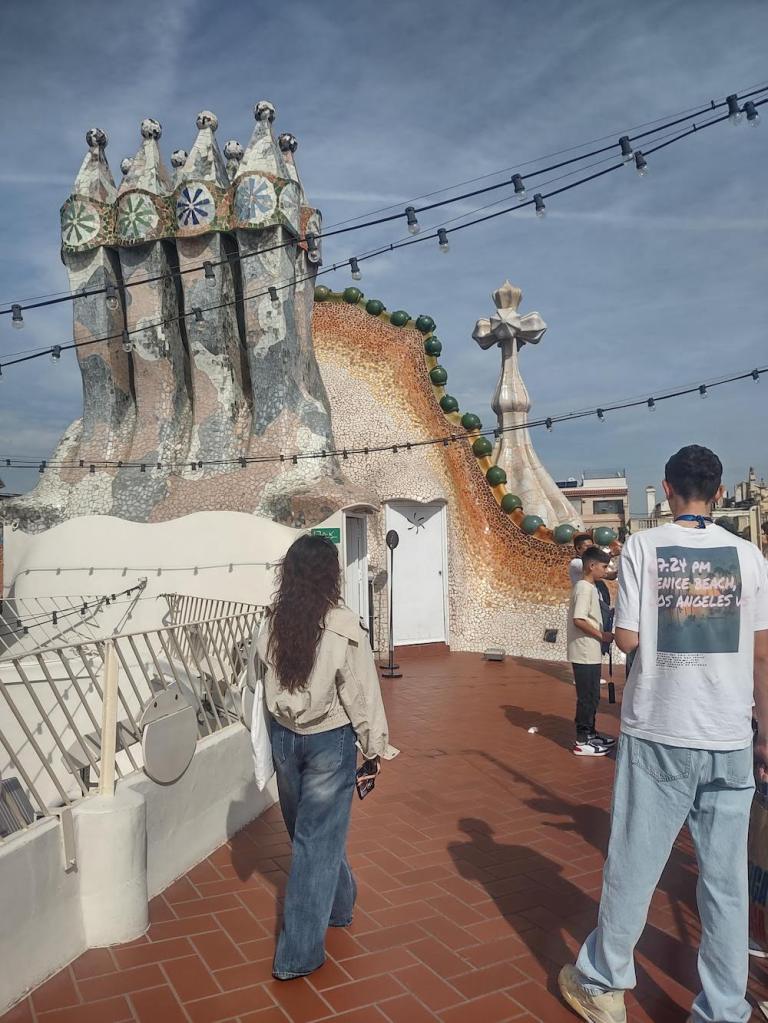
Now let’s skip to the roof. Instead of making 27 holes for the 27 chimneys, Gaudi grouped them, making the roof seem spacious and exposing views of Barcelona at many angles. In this shot you can see the central skylight at the left, one group of eight chimneys, and a portion of the features at the front of the building, including the one known as the dragon’s back, which conceals a clever water distribution system. The roof includes a concession where one can enjoy a drink al fresco. After all those stairs, we were happy to indulge.
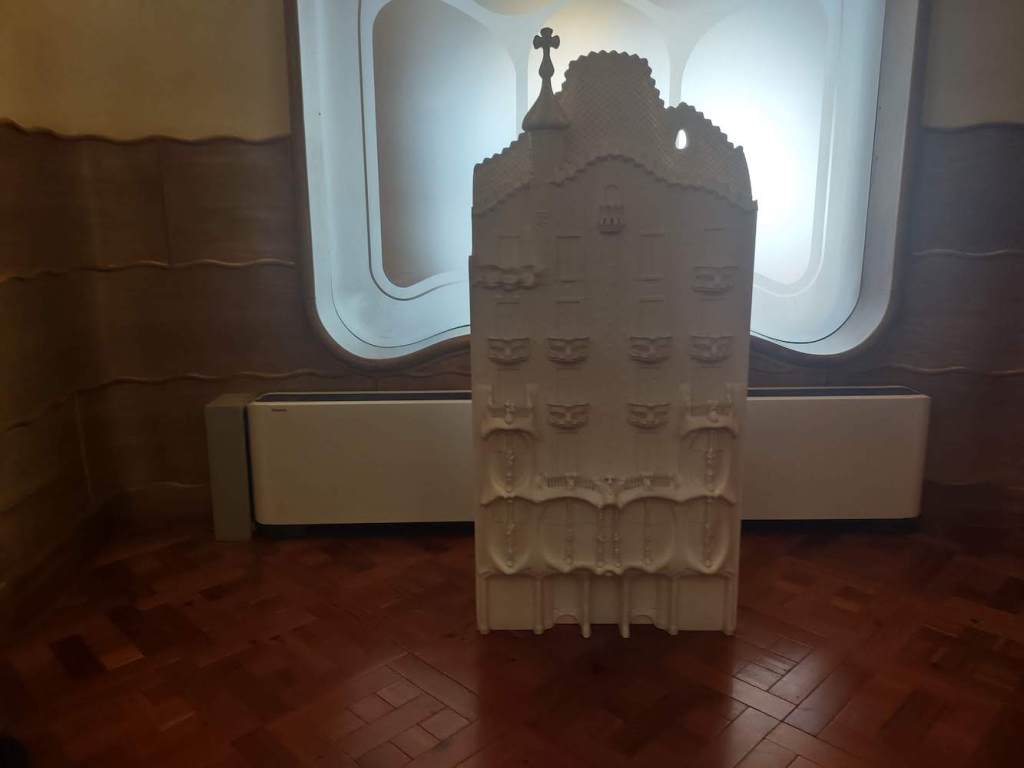
Gaudi made a model of the exterior. According to an interpretive sign I don’t completely believe, he directed the construction using only this, no other drawings or plans. And yes, the sign was in English.
I have no more words to summarize this creation than I did to introduce it, so I will bid farewell.
 Culminating Triad