History as a Noose

A lot of the ideas in this blog were inspired by the article A Warning from Europe by Anne Applebaum, in the October Atlantic.

Americans, at least middle class Americans, have always viewed history as an arrow, with each generation increasing in prosperity, knowledge, tolerance, and freedom, or at least we did until it stopped happening. Now we are variously confused, angry, discouraged, apprehensive, or indignant. Europeans, though, realize history is circular, possibly because they have more of it. They’ve seen Fortuna’s Wheel spin more than once.

History doesn’t think much of liberal democracy, because humans don’t either. Poland has made a remarkable transformation since December 31, 1999. Remember that hopeful, joyous night? Everyone was so happy the Y2K turned out to not be a thing. Poland was pretty much in the tolerant, fact-based, rule-of-law-oriented, liberal democratic camp. Now it is firmly in the in-group/out-group, alternate fact, corruption-funded, autocratic camp. Hungary is even worse.

You may know a few other examples.

The news is not that this sort of thing is happening, but why. When the water is rising but only some boats float, people in the boats left behind feel the system is not fair. History shows us that humans have no preference for democratic systems,  or for inclusive values like tolerance. What we have a preference for is the well-being of us and ours. If democratically-elected leaders aren’t improving my life, who needs ’em?

After you grasp this simple truth, it seems to be everywhere. If you’re one of the beneficiaries of corruption, supporting a corrupt government is a no-brainer; the previous in-group didn’t do anything for you, so it’s ok to screw them. Loyalty will be rewarded. Believing something that is obviously not true is not a sign of irrationality, but a signal to the in-group that you belong, and deserve to share in the spoils.

The embrace of Us/Them politics feels twisted when it’s endorsed by clerics, and sickening when it’s driven by racism, but only to those of us who bought into the democratic ideal. But did we really? Homes near ours sport Not My President signs, but unless you think the election was rigged, Trump actually is your president. Democracy is all about letting the majority–or in the case of the US, the Electoral College–decide.

Would those of us touting liberal values cling to them if we didn’t have funded retirements and successfully-launched kids? Surely it is possible our success was due to being knowledge workers and investors during the period in which white-collar work displaced blue-collar work and markets exploded. We were sad that others weren’t having the same results, but instead of fixing that, we allowed massive race-weighted incarceration, income inequality, falling real wages, and corporate corruption to burgeon on our watch.

We may be about to feel the pain. Short of divine intervention, Kavanaugh will start work in the Supreme Court on Tuesday, so shortly after the Mueller investigation is shut down and the President officially declared to be unindictable, we may face pay-as-you-go health care, re-direction of social security benefits to corporate tax relief, wholesale environmental destruction, and loyalty oaths.

Will the Trumpettes with their coal and steel jobs be better off?

Somehow we all have to breathe the same air.
Really Old Bread

Headline: Archaeologists discover bread that predates agriculture by 4,000 years.

The obvious way to have bread without agriculture is to use wild grains, and indeed, this 14,400-year-old flatbread was made from wild ancestors of barley, einkorn, and oats that had been ground, sieved, and kneaded prior to cooking.

I’m stretching my mind thinking about a person scraping the charred food off those ancient stones, oblivious to their repurposing 700 generations hence. I will tip my hat to my possibly-significant trash barrel next time I walk through the kitchen. Think of the treasure in the association dumpster!

Clearly I believe that our current age will fade into oblivion as surely as have all other ages of our species. I realize a lot of folks think our sentient computers will be able to maintain our most innocuous data for eternity. I say, Hooey.

Kudos to science, which can now “identify the remains of bread from very small charred fragments using high magnification,” according to the article. Making bread from wild grains would have been lots of work, a “special” food. Maybe there was a party that night.

Analysis was done in the UK, but the collection was done by scientists from Denmark, who have a grant to study how foods were used during the transition from hunter/gatherer to farmer. Close readers of this blog know that, unlike most Westerners, I think this transition was a bad thing in terms of work/leisure ratio, nutrient diversity, and egalitarian social structures. That is, unless you think more work, less nutrient diversity, and greater social stratification are good things.

I should watch my assumptions.

People in favor of the agricultural revolution and human hierarchy–I’ll call them civilization fiends–also tend to think that although our brains are getting smaller, we are still getting smarter. Yes folks, that’s a thing: We have lost 150 cc, or about 10%, of our brain size in the last 10-20,000 years. It’s the volumetric equivalent of a tennis ball. There are lots of theories about both cause and result, lots, with no clear leaders yet. I like the Idiocracy theory, which is, That movie was accurate.

At this rate of reduction, in another 20,000 years we’ll have brains the size of Homo erectus. I’m going to skip all the quips that just came to mind.

I’m reading Genius Foods, which posits that we evolved with our food for 150,000 years or so then abruptly limited our diet to the few things we can cultivate or tame, simultaneously dropping the daily challenges of hunting and gathering for the mind-numbing Sow; Nurture; Reap; Repeat. The authors definitely equate smaller brain with dumber brain.

They also have a plan for reversal of brain fog, if not brain shrinkage–check it out!

YLS Gossip

The allegations against Brett Kavanaugh–who demonstrated the dark side of his temperament at hearings today, much to the delight of Trump–have spilled over into his alma mater, Yale Law School. Kavanaugh loves to trumpet his record on hiring female law clerks, yet there may be a very non-Boy Scout reason: YLS clerk-vetter and Tiger Mom Amy Chua appears to have been coaching female prospects in both dress and demeanor, telling them it is “no accident” that BK’s clerks “look like models.” Chua is, sadly, now hospitalized with a serious, unspecified condition, but she managed to issue a denial this week which included a strong statement of support for BT, a denial which elicited charges of lying from past and current YLS female students.

Chua’s husband, Jed Rubenfeld, has, without saying why, advised female students to avoid clerking for BK or for Alex Kozinski, who retired as a Ninth Circuit Appeals Court judge last year amid growing allegations of sexual misconduct and innuendo. BK himself clerked for Kozinski, and stands out as perhaps the only former Kozinski clerk, male or female, who did not notice any inappropriate emails or actions in that office. Did he learn more than law from his mentor?

In any case, Rubenfeld may have been trying to cosy up to the female YLS students as much as to warn them, because Yale has hired a Title IX investigator to look into him for behaviors such as “excessive drinking with students.” Meanwhile, the student protest has expanded into demands for action on the part of YLS administrators to actively purge sexual harassment from both faculty and clerking referrals.

While expressing concern about the internal situation, YLS officially is not only a staunch supporter of alumnus BK’s Supreme Court nomination, but also completely silent on the accusations by Dr. Christine Blaseley Ford and others. Dr. Ford testified bravely before the Senate Judiciary Committee this morning, then the same group had a frat boy pile-on in the afternoon.

Women still have suffrage, at least.


New Favorite Creature: Pangolin

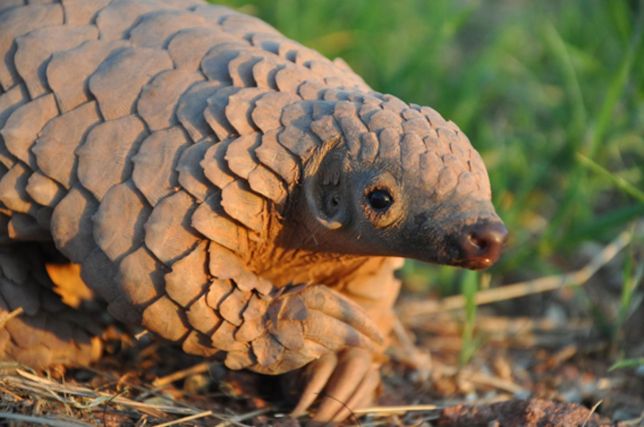
pangolin

It’s a mammal, up to three feet long including a long flat tail, completely covered by keratin scales except for its belly. It sometimes walks on four legs and sometimes on two, hunching over with its front paws dangling just above the ground. Its claws can dig through concrete. Its scales can deflect a lion bite. It eats termites and ants, up to 90 million per night. When threatened, it rolls into a ball.

Sadly, that means it can easily be picked up and tossed into a bag.

I renewed my acquaintance with pangolins via a Nature episode, The World’s Most Wanted Animal. Marie Diekmann, a Californian who now lives in Namibia, having dedicated her life to conserving endangered species, is the focus of the show. Diekmann adopted an abandoned newborn pangolin, Honey Bun, and there’s lots of adorable footage of Honey Bun messing up the house, Honey Bun and Diekmann cuddling, and Honey Bun bonding with Diekmann’s dedicated assistant Steven Mandja. Honey Bun will be released back into the wild when she is an adult. Meanwhile, Diekmann and Mandja take turns following Honey Bun as she feeds more or less all night long, both for scientific observation and to keep her safe. They have found poaching traps on their land.

Why are all eight species of pangolin endangered? For the same reason some species of rhinos, tigers, seahorses, turtles, manta rays, sharks, and antelopes are: Traditional Chinese Medicine. Though Westerners often believe these animal parts are sought to increase sexual prowess, most of them are believed to cure diseases. Pangolin scales, for example, are used for some cancers and for lactation issues. Most of these treatments haven’t been scientifically tested, so we don’t know whether they are effective.

What we do know is that that animal populations are simply too small to support the human demand. When humans aren’t hunting pangolins for medicine or meat, we are reducing their habitat due to our own expansion. Raising pangolins in captivity is nearly impossible, and even if it were, farming animals for medicines is a cruel alternative. Thousands of black bears in China are confined in crush cages with a permanent hole in their abdomens leading to their gall bladders so their bile can be collected, a state so painful, according to Wikipedia, that some bears try to kill themselves.

Chinese people are divided on these issues. Pangolins in particular have a great ambassador fighting their cause, Chinese superstar Angelababy.  With over one billion Chinese people, though, even if most of them abstain, there is still plenty of demand. Chinese laws prohibit sale of  most endangered animal parts, but high prices keep the market alive.

The obvious solution is to eliminate demand, but not many people from any country will value animal lives over their own family’s health. Demand for traditional medicines might drop if effective health care were readily available to everyone, worldwide, or if there were no diseases.

Global universal health care? Elimination of disease vectors? I don’t think I am close to a solution here. Enjoy the pangolins while you may.

=======================

Photo from Metro News, metro.co.uk

Week of Weird News

As everyone who listens to Wait Wait…Don’t Tell Me knows, there is weird news every week. Here are a few that caught my attention recently, three nature-related and three technical.

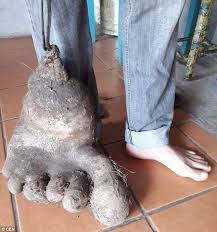
This 17.5 pound Brazilian potato achieved its shape without direction from the gardeners. Human feet potatoes seem common enough on Google; this is just the latest. The couple who grew it are “a little bit scared” and “don’t plan to eat it.”

Potatofoot

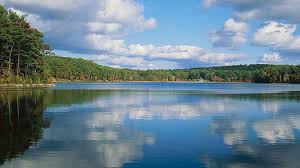
The fish of Walden Pond, a location near and dear to my heart, are being devastated by high levels of nitrogen and phosphorus that scientists say are likely due to generations of urinating swimmers. The article suggests more bathrooms, but you know, there are bathrooms. Swimmers are clearly making a decision. It was so beautiful, yet now it looks different to me.

Walden Pond

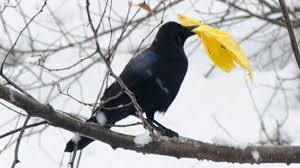
A park crew in France has trained crows to pick up litter in exchange for food. Crows are pretty smart, so perhaps I should say “employed” instead of “trained.” I’m not sure how I feel about wild animals being semi-domesticated in this manner, but those park crows are probably eating a lot of human discards anyway. I hope people in that park don’t start littering more, thinking, Just let the crows take care of it. 

crow with litter

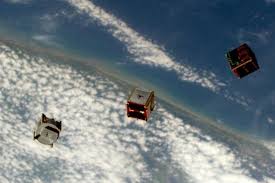
A Japanese firm called Warp Space is offering newlywed a chance to add their names to small cubes which will be launched into space from the ISS. Whap Space might be a better name for it. Just this month Neil deGrasse Tyson was on The Late Show explaining the threat of space debris; even a loose bolt is a serious problem. The ISS flies at a height of 254 miles, and GPS satellites at over 12,000 miles, so at least these cubes won’t threaten our ability to navigate to Home Depot.

warp space cubes

When the ACLU used Rekognition, the new facial recognition software from Amazon, on the US Congress, it found 28 matches with mug shots of arrestees. Genders and ages seemed to be affected equally, but people of color were misidentified at a higher rate. This tells me that the IDs were indeed erroneous, since the vast majority of indicted officials I see on TV are white men. Amazon–every social media company–should hire software developers who score neutral on the Project Implicit test suite. Or if that’s too hard, maybe the software could somehow be subjected to the test before release.

I read about a Welsh fellow who is stuck in Dubai after the car rental company confiscated his passport, which it did after he amassed $47,000 in speeding fines in four hours. He was caught on camera 33 times, traveling at up to 150 mph. Most Americans feel those cameras that catch you speeding are, well, unAmerican. Maybe they aren’t used in Wales.

I seem to have missed the rental scooter revolution. Rental scooters seemed to appear in San Francisco, become pariahs, and disappear, all in short order. Now Bird scooters in LA are being thrown off balconies and into the ocean, defaced and set on fire. The Easy Chair column in the October Harper’s makes me think rental scooters should be avoided due to addiction. Don’t do it! You will make wrong decisions.

burning scooter


Justice Bro

Why do no one seem to care that Brett Kavanaugh

  • Lied to the Senate under oath;
  • Was by his own admission a blackout binge drinker in high school and college;
  • Appears to have incurred significant gambling debts multiple times;
  • Claims as a clerk under Alex Kozinski to have been completely unaware of Kozinski’s decades-long sexual harassment of female clerks;
  • Believes a woman’s employer should decide whether she gets contraceptives; and
  • Is creditably accused of sexually assaulting a high school classmate, including covering her mouth so she could not scream?

Not to  mention that thousands of pages of his salient legal opinions are being withheld from scrutiny.

It’s not that no one cares, exactly, but the main stream media has dropped most of these points. The sexual assault claim seems to have some attention at the moment, though it may soon fade, as have the other revelations. The overall situation feels like a mounting preponderance of red flags to me, evidence that should at least be carefully considered before confirmation.

Just restating the obvious. The political situation here is so toxic it’s hard to describe. Rational response has become unthinkable. As a commentator said tonight, The mindset is to brazen it out. This is also the message of Fear, of which I have read about half. This administration wants to win, and is happy to win by upping the crazy stakes, even if it ends democracy and bankrupts the country. Not just Trump, either–a lot of the “adults” around him are in on it, as are all the Republican Congressmen and, disappointingly, Congresswomen.

I think that I think that the frenzy will end, that analyses written fifty to one hundred years from now will identify the pariahs who led what all will agree was a dark period in US history. But I’m not sure. Sometimes I think all reason will have disappeared from Earth by then.

Whale Watch Pix

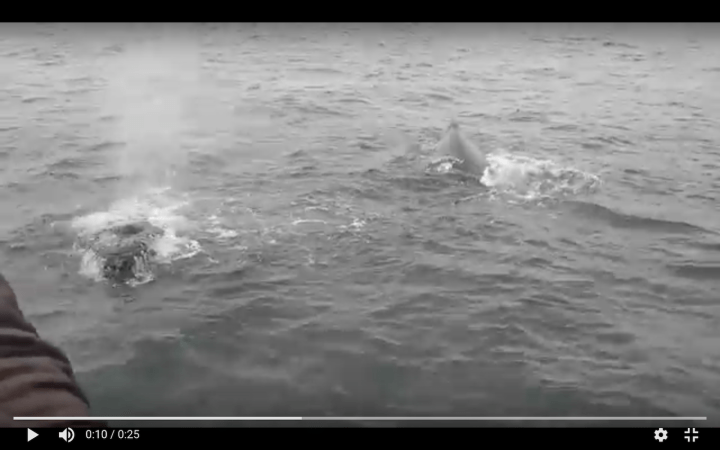
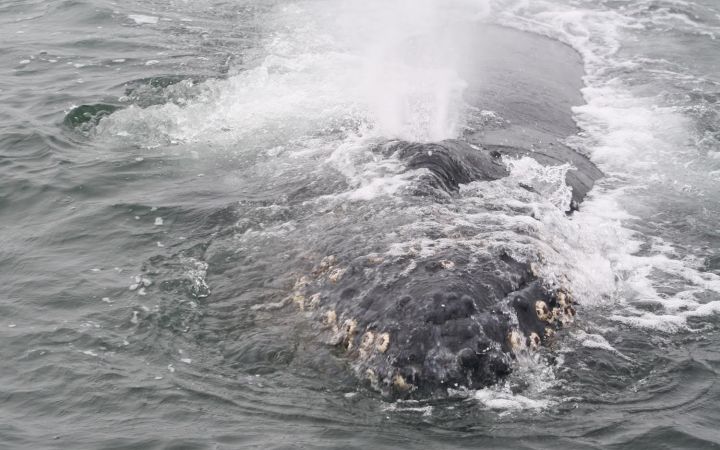
We went on a whale watch with our son and his girlfriend while they visiting in August. Every whale watch is different. This one was on the low side of number of whales spotted: only two, a humpback mom and her largish calf. The reason the boat lingered for over an hour nearby was that these whales kept coming very, very close, yielding some great views. This blurry one is a frame from a video. The whale on the right had just breathed, and the one on the left is in the process of doing so.

Two Whales

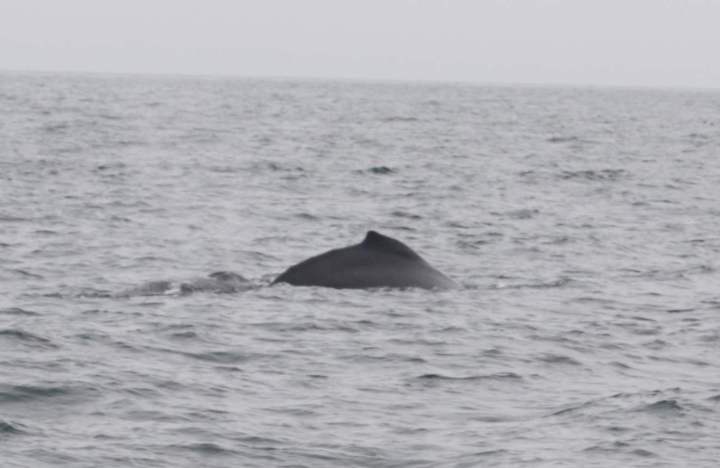
All the rest of the pictures are stills shot with a digital camera not on a phone, and show one whale only, though perhaps not always the same one. This characteristic pose showing the dorsal fin is the source of the name humpback.

Humpback dorsal fin

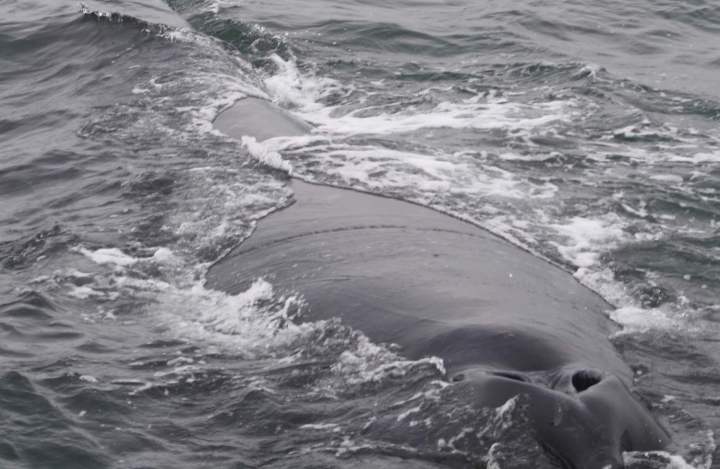
In this one, you can clearly see the double blowhole characteristic of baleen whales.

Dual Blowhole

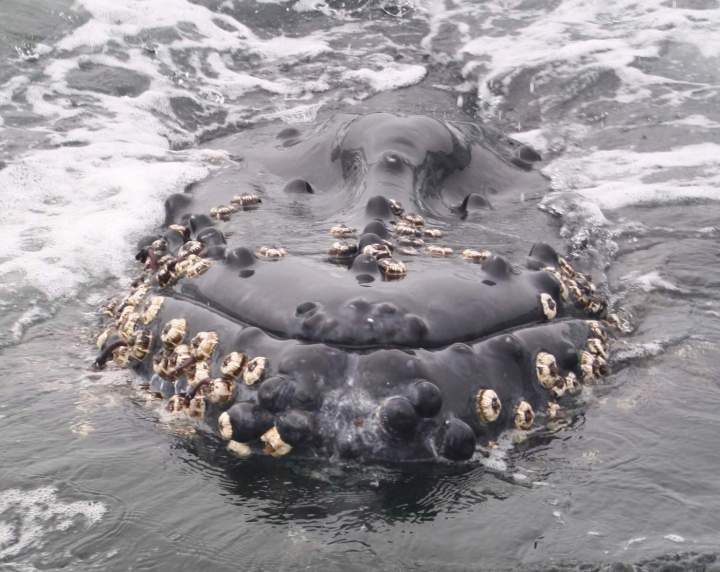
Here is the head, showing some of the barnacles. A humpback may carry 400 kg of barnacles, each perhaps 8 cm in base diameter. The baleen hangs from the upper jaw. Centered in the powerful lower jaw is a relatively-recently discovered sensory organ used to position the jaw and deploy the throat pouch during lunge feeding. I just read about it in Nick Pyenson’s Spying on Whales.

Snout Detail

I call this next shot Snout and Spout, though I shouldn’t. While the whale’s rostrum and jaw remind me of the snout of a dog or alligator in terms of shape, the blowhole is the closest thing to a nose.

Snout and Spout

Whether whales are breaching or just checking out the boat, they never fail to fascinate me.


Who Knew? – UPU Edition

Yesterday, a Planet Money segment explained something I’ve wondered about for years. A guest on the show, who wanted to start a mug company, found that shipping a mug within the US costs more than both buying and shipping a mug from China. I’ve noticed this phenomenon on everything from Amazon tchotchkes to Whole Foods mangos: Items that travel farther than a grey whale migration (5000 miles one way) are competitively priced with items that don’t.

Why? The answer is the Universal Postal Union.

UPU is a UN agency that coordinates international postal policies, limiting excess charges for international shipping. For years, that worked out for the US, with the USPS realizing revenue of over $200 million annually when most mail flowed Out. And when money is clumping on your shore, you tend not to complain about having to shovel it in.

Since the rise of e-commerce, most US mail is flowing In. Today, the USPS has an annual deficit of $80 million on international mail. The UPU modified the rules in 2016 in response to e-commerce, but it is still much, much cheaper to send a package from Beidaihe to Santa Cruz than the reverse.

To Send is better than to Receive under this economic structure because, as a moment’s reflection will reveal, the costs of mail delivery are much higher on the receiving end, where a human in a truck or on foot personally visits each destination. At the post office, bags of sorted mail leave together for the first part of their trips via truck, plane, or boat, reducing the per-piece cost.

The actual cost for a mug to travel across the world, in terms of energy expenditure alone, is clearly most than the cost for it to travel from North Beach to Noe Valley, though the pricing may be lower. This economic distortion is not just anti-climate, it’s anti-small business. I love that handmade hummingbird feeder made by a craftsman in Minnesota, but I can get a similar item made overseas for less money, quicker delivery, and Free Shipping.

I’m making this choice because I’m unemployed. If we all keep making similar choices, we all will be.

A Pox on Pollsters

Everyone makes fun of meteorologists because they are so often wrong, which is patently unfair. Weather takes place over largish regions, and weather-people do a pretty good job predicting regional weather, especially if they are employed in a location with significant land mass due west, whence weather wends its way.

Fans or not, most folks heed the weather forecast for a laugh or a conversation gambit, and we should take polls exactly as seriously, except there’s no regional win or western-land-mass equivalent. Polls are just wrong.

The orangutan-in-the-oval-office miss by all polls in the US in 2016 has neither been explained nor expunged. Recently in the US, polls completely missed the “upset” wins of Andrew Gillum, Ayanna Pressley, and Alexandria Ocasio-Cortex.

I’m not sure accurate polls are possible, given individual control of technology. It’s really hard to get a truly random sample across the political spectrum, and the nasty practices of herding and aggregating don’t work on any but the most fastidiously-conducted polls, which require hard, time-consuming work.

Fastidiousness is out-of-fashion these days.

All three candidates named above won their primaries without support from the national Democratic Party, which is good-news/bad-news. The Dems have been out of touch since before they chose a singularly polarizing presidential candidate uncrowned by their own primary system, so it’s good to see People’s Choice candidates triumphing over We-Know-Better-Elite ones. But it means the Dems still don’t get it, and if they haven’t gotten it by this time they never will, which means the party of A Gun for Every Tot could sweep this November.

Don’t even mention those polls. Polls schmolls.

It’s hard to remember, but I have in the past been an actual Independent who voted for candidates regardless of party, before all this shark-jumping started. Have you seen Condoleeza Rice as product-placement at the Kavanaugh hearings? I think she’s become a white supremicist. If I lose my health care and my Social Security, no amount of rabbits with plane tickets, cabinet members with cone-of-silence phone booths, or toxic caterpillars will be enough to laugh my way out of that covfefe.

The Wizard and the Prophet

This post reviews the titular book, written by Charles Mann, in which he neutrally explores today’s two dominant views on Man vs Nature from the viewpoints of their primary progenitors: The Wizard, Norman Borlaug, who believed technology will solve all our problems, and the Prophet, William Vogt, who encouraged us to live within Nature’s limits or suffer dire consequences.

It occurs to me that I read a lot of books on scientific topics written by journalists, and that I usually complain about the science, which I am about to do. Maybe I should limit my science reading to books by scientists.

This book is as much history as science, but the science is critical to his arguments. There is a long discussion of photosynthesis, and the possibility of modifying it, with nary a mention of oxygen, something I feel messing with photosynthesis might affect. He lets GMOs off the hook without mentioning monoculture, even though a lot of words are spilled on scientists desperately seeking new seeds to cross in search of genetic variation. He pays obeisance to Lynn Margulis while claiming her main legacy–non-genetic inheritance–came to naught, whereas it is very much in current ascendancy.

I really liked Mann’s 1491, and I also read 1493, though that was mostly depressing. In this book, he praises the Industrial Revolution as a boon to all mankind, to quote Three Jolly Coachmen, which is pretty intense given that much of 1491 was devoted to praising the healthy, equitable, autonomous, leisure-full, famine-free lifestyle of the North American tribes, a lifestyle mostly deleted before the IR, but certainly not one it would have allowed.

Despite these gripes, I did read this entire book, and learned a lot as well. If you’re like me, you think that while we are using fossil fuels, the Earth is creating more, so the problem is just the speed at which we use them. This isn’t true. All the fossil fuels we have were created during the Carboniferous Period, pre-fungi. Now that there are fungi, biomass does not turn into coal or petroleum.

I also liked his examples cautioning us about changing the future. Decision-makers living 300 years ago would have been horrified by a future in which slavery is illegal, women have rights, and social class is disparaged, and they would seek to prevent it. The Lenape of Manhattan would probably choose to keep their homeland despite the loss of Lincoln Center and the Met.

No matter what we do, or don’t do, about climate change, we will affect future generations, just as Borlaug and Vogt are affecting us now.