Do Something New for Your Brain

I’m just started reading The Shallows: What the Internet is Doing to Our Brains by Nicholas Carr, which was written almost a decade ago. Hey, once something gets on my reading list, it stays there until I at least try to read it. In this case, I’ve stopped reading it about one-fifth of the way through to give myself time to absorb the information, which I will not do if I’m race-reading. Naturally I read more quickly when I’m interested, so unless I pace myself, stuff I’m keen to learn is the stuff I am least likely to retain.

A paradox.

Another paradox is that neuroplasticity has a serious downside. By now, you probably know the current science on neuron regrowth is that is happens continuously throughout life. This is great news if you’re starting a new career. If you become blind, your other senses may expand enough for you to live and work productively. Doctors have even reversed paralysis in certain cases. The process can be slow or seem capricious, and may be less vigorous as we age, but it is real.

Neurons can even be mapped by thought. In one case, a group of non-musicians learned to play a simple tune on the piano, then were divided into two groups. One group practiced the tune on the instrument, while the other spent the same amount of time sitting at the piano and imagining playing the tune. The expected neuronal growth occurred identically for both groups.

Cue the Twilight Zone theme.

Neurons want to fire, so the ones that become unused try to find something to do. Imagine losing a hand. At first, the neurons continue firing, giving you the impression that your hand is still there. Lacking stimulation, they remap to cover something you commonly do, which ideally would be controlling your new prosthetic hand. To achieve that goal, you have to spend a lot of time practicing moving your hand, perhaps even moving it physically using your other hand until the neurons catch on. If instead you get a hook, some of those neurons may control new movements associated with using that, while others may map to your other hand, on which you now rely more. Neurons will be flock to any activity you do regularly.

That’s the problem.

Any habit, good or bad, is reinforced every time you do it, reinforced even to the point of gene selection–yes, neurotransmitters can do that–while unused neural pathways literally disappear as those neurons seek activity. So if I stopped reading every day and instead watched hours of TV, over time I would become disinclined or even unable to read, and would find myself increasingly compelled to stare at the television.

Each time I take a drink of alcohol, I make it more likely that I will drink alcohol. Just sayin’.

This effect is very notable with disease. If you focus on how bad you feel, you will continue to feel bad. This may explain why some people seem to have a lot of ailments that limit their activities, while others rarely give in to anything. The Shallows posits NP as a major factor in chronic depression, OCD, and even tinnitus.

When–if–we swap good habits for bad ones, we hasten intellectual decay. So if there is something you don’t like about your life, don’t dwell on it. Instead, try something new. Your brain will diversify to enable you.
Eight Baby Bunny Rabbits

Waiting for my husband to emerge from his last meeting of the day, I was reaching for my phone when I noticed a compact rabbit grazing in the manicured office park lawn, just in front of a row of shrubs. Shortly another one popped out, then another. Being alone, I had no reason not to exclaim aloud, and soon my dialog evoked a Pre-K storybook readaloud: Now there are four bunnies! I see number five peeking out! Oooooh, bunny six is in a big hurry!

Eventually there were eight identical small bunnies. A litter?

So cute! Short ears forming a tiny TV-antenna-V on each head. Heads perking up alertly between mouthfuls. Long grey bodies looking sooo soft, with just patch of white fur where the tail should be. Sometimes they hopped, and sometimes they ran. One was very fast. They whack-a-moled in and out of the shrubbery row, reacting to walkers, birds, cars, and a dozen other potential threats undetectible by me.

While watching, I reminisced about Rabbits I Have Known. The first, and last, mammal I intentionally killed was a rabbit. I like shooting, but I don’t like killing. I had shot my BB gun at birds and squirrels often with no luck, but on my first rifle hunting trip, at about age twelve, I connected, and was immediately horrified. The shot wasn’t clean; the animal suffered.

I have many happy memories of touching soft, sweet bunnies at school, at friends’ homes, and in petting zoos. The Easter Bunny was part of my childhood, and to a lesser extent my children’s. An incomplete list of faves includes Br’er Rabbit, Bugs Bunny, Roger R., Peter R. and Little Bunny Foo Foo. I’ve also eaten some delicious rabbit, especially in Paris. I was introduced to a Playboy Bunny once when I lived in Dallas.

Rumination and observation are all too rare in my life. I’m starting to wonder whether today’s constant barrage of short messages, article summaries, quick-break shows, and lightning round social interactions is affecting my ability to think analytically, memorize, and focus. I can still easily spend an hour reading a book, but I get bored quickly while waiting, and I have an impulse control issue around texting every pedestrian event en route to a social engagement:

Heading out now!

Had to park on the top floor, be down soon.

I’m at the bar.

I’m in the lobby.

I’m in the cell phone lot.

I’m looking at the moon.

I’m listening to an accordion player dressed in spangled bubble wrap.

I’m deciding whether life is meaningful enough to justify getting out of bed.

Put down the phone, woman! Much better to take some deep breaths, smell the roses, or observe a few bunnies, preferably without texting or snapchatting about it.


Life in the Lame Lane

Since I hurt my foot last week I have been referring to myself as a Crip, meaning cripple, not enemy-of-Blood. I’m now thinking that this is offensive when used by people outside the group of actual cripples, like so many other In-group words I am not willing to type. So I’m going with Lame.

Traveling is expensive, so after I paid the hefty change fee to join Bill on his post-NJ Boston business trip, I decided to economize on the NJ-to-Boston leg for me–my husband flew, since he’s being reimbursed. Trains are just as expensive as planes, so I went for Megabus between NYC and Boston. It’s an adventure, right? I have no compunction about asking my son and nephew to use it, why shouldn’t I? There are even reserved seats, and I got one with a (tiny) table that was thankfully on the lower level.

Those plans were made before I injured my foot.

It’s not quite as economical when one has to take taxis for all the interstices–Penn Station to Megabus, South Station to Brookline. Happily there was a free shuttle to the NJ Transit train station from the hotel.

Those taxis compensated for the luggage dragging factor. My husband, with four perfectly useful limbs, looks like an athlete to me as he blithely wafts two suitcases and two carryons through the various stages of modern travel. When I’m alone, I wield the cane with my right hand, so I have to drag my luggage stack with my left, and I can feel the extra strain.

I can’t do stairs even sans luggage, so there is extra walking to elevators or ramps; the ramp entrance for Princeton Junction Station in particular was a significant haul. Trains all seem to have annoying Mind the Gaps between their exits and the platform, so I had to look helpless, or hopeless, until someone volunteered to advance my luggage. No conductors! I couldn’t get down the stairs to the cushy seats, so I sat in the shockingly uncomfortable handicapped section.

The stressful bit is, I feel I am re-injuring myself at every step, or at least not  progressing toward healing, and I can’t help but wonder about being permanently lame. My previous, more minor injury to the same foot had persisted for eight months, and though my doctor is confident about my getting over this, she assumes I am letting it heal. I don’t think I have a chance at a single job for which I’ve applied if I can’t get around pretty vigorously, and weight gain is already a problem.

I suppose we all fear the life-changing medical incident or diagnosis, and I’m wondering if this is mine. Disturbing though it be, there are worse ones.


Sound and Light

Graduation day for Westminster Choir College! We arrived at 9:35 for what we thought was a 9:30 opening time, but Princeton Chapel was already two-thirds full. Though not nearly as tall as Notre Dame de Paris, it’s three times as long; from the back, humans in the choir look like ants. So we sat in the most distal portion of the transept, with a very good view of the front of the choir, where the exchange of handshakes and diploma-placeholders would occur, but blind to all else both right and left of the crossing.

We primarily heard rather than saw the three-hour ceremony.

A small choir college, WCC requires all students to attend every graduation, creating a well-trained choir of about 300 voices. Combined with Princeton Chapel’s 8000-pipe organ and an invited professional brass and percussion ensemble, the music can be felt as well as heard, seeming to reach toward the ear of God.

As my gaze idly explored the crowd, the vault, the towering walls of stained glass, the massive columns flanking the aisle, I noticed that the view seemed to change with the texture of the music. As the musical mood ranged from contemplative to triumphant, from beseeching to joyous, the structure, people, and even the airy space seemed to waft gently, preen, quaver, or glow.

I have often experienced this form of synesthesia. While driving through a crowded city, changing my car radio from classical to rock to folk changes the apparent mood of the pedestrians from graceful and dignified, to hurried and driven, to friendly and relaxed. Drizzle striking the window may change from chilling to comforting when I change my headphone feed.

A view-changing sound may not be musical. Sunny, birdsong-filled woods become a menacing challenge to survival with the addition of a scream, a snarl, or even a twig crunched by an alien footfall. Participants trapped in an acrimonious meeting may view the conference room as a torture cell until someone enters carrying a cooing baby, changing it into a tot lot. When I’ve lost my keys, the friendly, useful items on my bedside table become sneering clutter-monsters, conspiring to hide and confuse. The sound in that last case is my keening.

Experiencing such things is a crucial part of the fabric of life, a much better way of knowing you are alive then, say, the fact that your fingernails are growing. I think I am too old to be a candidate to have my personality stored in the Cloud, but even if it did happen, I don’t think I would be alive in any meaningful sense.

Photo Ops

I have a fracture, or a microfracture, or maybe just an irregularity, in my fibula at the ankle, and I’m supposed to stay off it for 6-8 weeks so it can heal. So far that means I’m walking less, and trying to use a cane when I do. The timing for this injury, one week before a 9-day trip, was poor. Airports, hotels, campuses, all are so Large. I limp ten minutes just to get from my room to breakfast. The pool–best type of exercise for me, if I could get there–is probably a quarter-mile away. Common activities like getting into and out of cars take forever, and of course I can’t just pop to the grocery store and grab a few things, so I’m constantly both frustrated and exhausted.

Those are excuses, not that I believe in those, excuses that explain why I’m just posting pictures today instead of writing more.

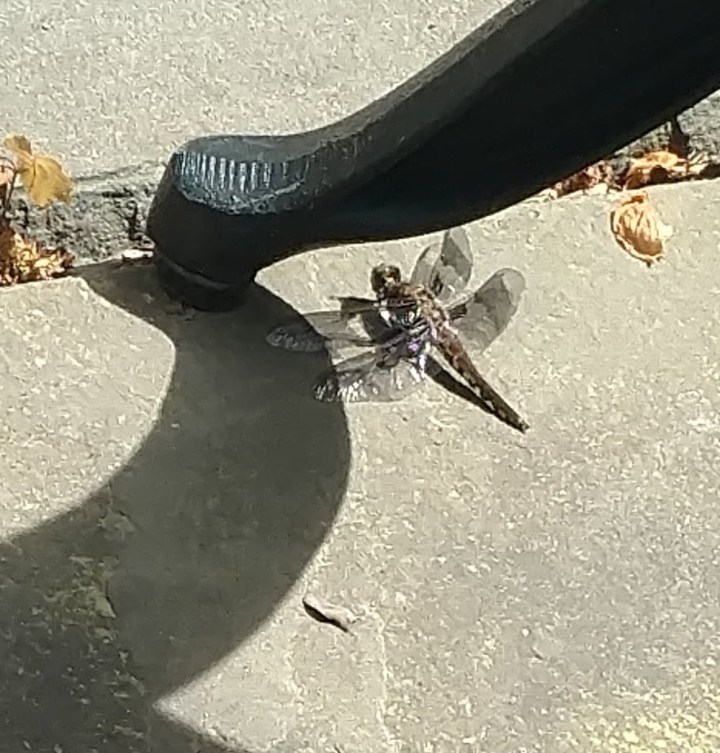
On the happy side, my husband has become even more my champion, and the weather in New Jersey is balmy and green. Was there truly winter here? I went outside to sit on the patio like an old lady and immediately saw a pair of dragonflies mating under a chair.

Dragonfly

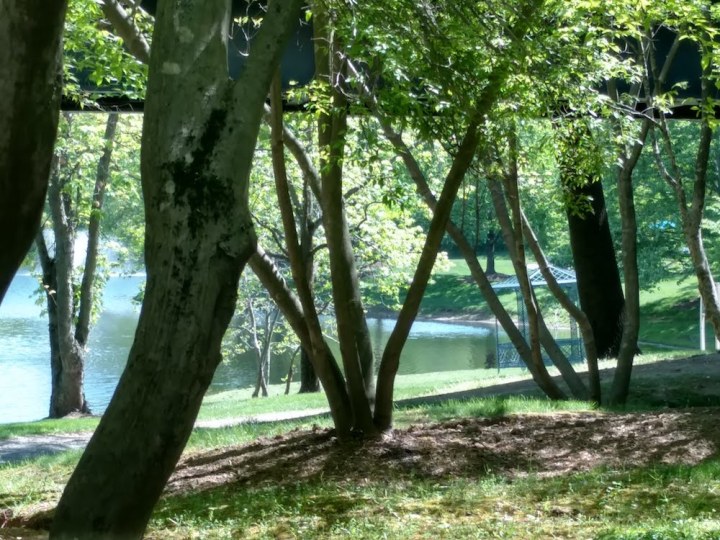
Between chapters of my book I admired the hotel landscaping.

HotelLake

I couldn’t give tours at the aquarium last week, so I spent some of my down time taking pictures. We have a new exhibit of squid eggs. Each pod is about three inches long, and is itself a cluster of many eggs.

SquidEggs

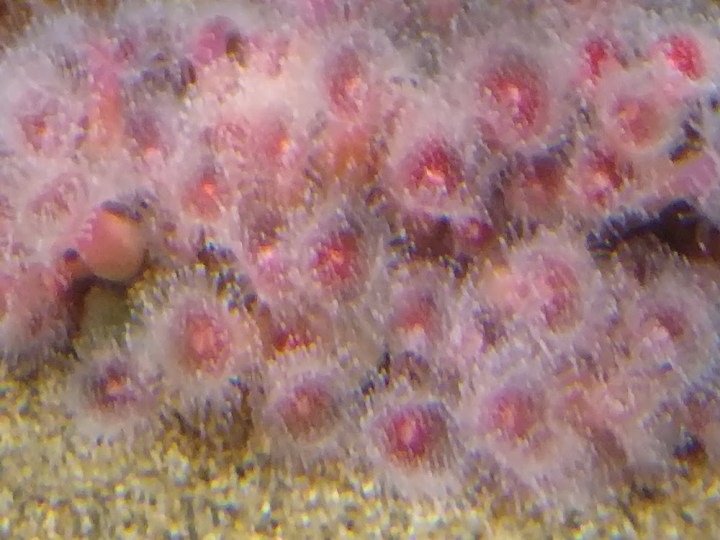
Here is a blurry photo of some strawberry anemones. They are each less than one inch in diameter.

StrawberryAnemones

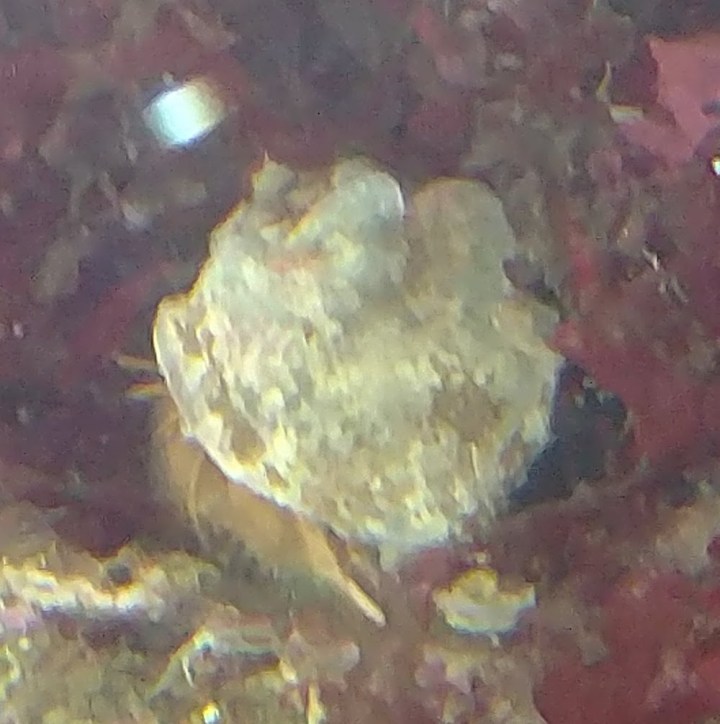
The rocky reef tank had three interesting things going on. Here’s another fuzzy photo, this one of the large hermit crab, whose shell is almost the size of my fist.

HermitCrab.jpg

This seastar has extruded its stomach against the glass. Did it find food there?

SeastarStomach

The giant green anemone behind it appears to be pouting.

PoutingAnemone.jpg

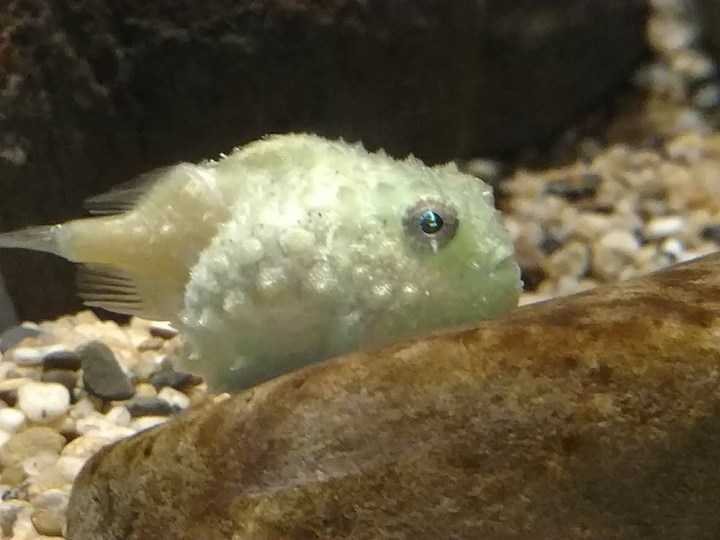
I actually got a good shot of this lumpfish. Lumpfish dart around and attach themselves to things like this rock.

Lumpsucker

Just looking at these pictures lightens my stress. Nature provides nurture.

Dem Foot Bones

There are 26 bones in each human foot, and those 52 foot bones comprise one-quarter of the 206 bones in the body. Besides bones, feet have copious sensors that contribute to our proprioception and measure force and contact pressure on our soles. Lots of bones and lots of sensors make our feet high-res environmental interfaces.

So why do we cover these highly-tuned systems with socks and heavy or constricting shoes?

Doctors figured out that children develop better balance, strength, and coordination if they learn to walk without shoes, or at least with minimum foot coverings such as booties, several decades ago; my sons are in their twenties, and that was established science when they were born.

Somehow though, we haven’t translated that to grownups, at least not in developed countries. Tribal peoples continue to dominate western racing, especially ultramarathons, running barefoot or with minimal protective covering, and college distance running coaches have known since the 70s that barefoot practice reduces injuries, yet it’s still controversial.

I think that’s because there is a lot of money being made by athletic shoe shills.

I switched to minimalist shoes a few years ago, and immediately was able to run much farther with fewer injuries. By the time we moved to California, I was very confident about my foot health. I picked up Morris dancing and started doing a lot more Scottish Country dancing. Last year I got a mild strain in my left ankle, which I’ve been nursing along. Last week I fractured one of those little bones in my left foot.

Feet and leg biomechanics are not optimized for leaping from toe to toe.

This one small bone will probably heal itself, eventually. But for the nonce, I am forced to lollygag my way through the day, favoring a foot. I ascend stairs on one knee, and descend on my bum, at least at home where all is freshly vacuumed. I have made a permanent dent in the sofa after only two days. I keep a box filled with supplies, which my patient husband transports between floors. My Fitbit step count has plummeted.

I’m not thinking beyond the immediacy yet, the immediacy of how this will affect exercise, folk dancing, hiking, job-hunting, beach-walking, life-in-progress. I am a movement-oriented person treating myself to a bit of denial for the first few days.


Pagan Nostaglia

Morris dancers have been part of the pagan celebration of May Morning for centuries, and my husband is no exception. When I realized that on every First of May he rose before dawn to join others to dance and sing by the Charles River, and that he was adamant about the importance of this, rain or shine, workday or sleep-in day, I accepted it as an adorable quirk I would never share.

Eventually I tried it though, and found it not without charm. In Boston, there are 100-200 celebrants, depending on the weather, with Morris and English country dancing, songbooks to share, and multiple vigorous Maypole weavings, all at three stands. A group of Harvard students in evening wear dance and drink champagne on the Weeks Footbridge, after which they form rows through which we pass, shaking their hands, wishing each other Merrie May!

I surmise the Young Masters get good luck by shaking hands with the chimney-sweep-equivalent dancers.

Some time after our kids arrived, we realized that most of our family’s recurring traditions revolved around gathering with our extended mostly-English-based folklore family. On May Day we celebrate the end of winter to ensure fertile crops, cows, ewes, and wives.  Dancing and feasting at Easter is based on a pagan tradition of the sun dying and rising again. There is a harvest festival in the fall, Wassail in early December, a Morris Ale over Memorial Day.

Here in California, these European-based rituals are tiny echoes of what we knew on the Left Coast. Celebrating the no-frills, skeletal version of a “proper” May Morning leaves me a little sad, although the people are very nice, and just as committed to their own version.

It’s sort of like Christmas in Hawaii: Familiar yet strange, with a whiff of adaptation.

Big picture: This as one of the things we’ve traded for a slower-paced life in an oceanside town with no snow. Worth it.


Heavy Lifting

I interviewed for a job as a letter carrier with the post office. It has been a dream job for me, in this odd way: as someone who prioritizes exercise into my schedule, I’ve often thought it would be easier to exercise and work at the same time. I’m too pudgy to be a personal trainer, and too urban to be a forest ranger. Letter carrier should work, especially in a Mediterranean climate.

As it turns out, there are a few surprises. The USPS is modeled on the US military in the sense that one must start at the bottom and work one’s way up. Every City Carrier (CC) starts as a City Carrier Assistant (CCA), filling in on the days-off of CCs, at any location in the county; covering the Amazon contract work and private-carrier overflow on Sundays and holidays; and working six- or seven-day weeks on a schedule dropped two days before it starts. This lasts for a minimum of three months, a likelihood of one year, and a possibility of five years or more; it ends when one has sufficient seniority to capture the CC job of someone leaving.

On the positive side, there is minimal supervision, and all carriers become very fit, often walking ten miles per day. Once you achieve full carrier status, you have a regular route and can establish relationships with your customers, and a regular five-day schedule, though not necessarily weekdays. There are full benefits, including the possibility of a pension for those who last enough years.

It would mean giving up my volunteer work, and I have been a regular volunteer as long as I have been a regular worker. Nights would mostly be my own, and while I’m not sure I would feel like folk dancing after walking ten miles, maybe my fitter self would. I have no idea how one fulfills dental or medical appointments, or attends the symphony or the ball game. My sister does this work, in Texas. I visit Texas and see other family members, but usually not her; she can’t get the time off.

Both of the two friends to whom I have mentioned this think I should try it. My husband’s immediate response was, You would hate that. The interesting part is not so much what I will decide, rather, what full-time hourly-wage work can be like. I see why the USPS is much more constrained than, say Wegmans. The mail has to be mostly delivered during business hours, or at least daylight hours, and often by a specific date. Instead of customers standing in line longer when there aren’t enough cashiers, CCAs work longer hours when there aren’t enough of them.

Which is always the case. There are a lot of folks out there working very hard, without many breaks, sometimes thirteen or more days in a row.

Did I think about this the next time I ordered from Amazon? I did. I even tried, briefly, to find the items in stores. Then I ordered from Amazon.

Who Falls Behind Whom?

I had a long conversation earlier today with a friend  who is discouraged by the current State of the Union, as our worldwide standings in education, health, science, justice, and infrastructure continue to droop, a slide that predates the Trump presidency. But at least the US doesn’t have Programmer Motivators.

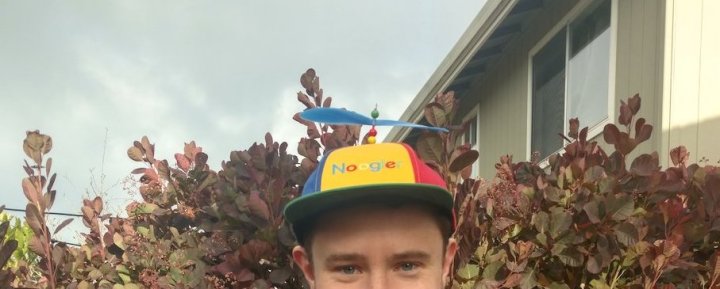
With a Noogler in the family, we can confirm all the rumors about Silicon Valley programmer coddling, which includes work-while-you-ride luxury-bus commutes all over the Bay Area; multiple free gyms; continuous free, high-quality food, from vegan to BBQ; free dropoff wash-and-fold laundry; subsidized haircuts, dry cleaning, and clothing stores; wine tastings; and cold brew coffee.

Noogler


Though SV is not known for its female-friendliness, even a full compilation of SV perks would not include Programmer Motivators, young, attractive women hired to provide snacks, shoulder massages, diversion, and sympathy to male programmers. According the NYT, this is a Thing in China. The age range, gender, and appearance are specific job requirements, including a height specification. Many Chinese people, including women working as PMs and rare women programmers, seem to be ok with this concept.

Programmers are hard to recruit, and at least one Chinese company is venturing farther along this slender branch. An online recruiting ad shows Chinese strippers proclaiming their fondness for nerds while they demonstrate their craft, interspersed with the voiceover of a female who sounds like she is wearing more clothes listing technical job requirements.

So while the US falls behind our peer nations in most categories, we continue to lead in the spectrum ranging from political correctness to legal protection of gender rights, as evidenced by the #MeToo movement and the recent Cosby conviction. Not such a bad thing, quoth the Raven.* Though it is not obvious why we can’t achieve both.

==================================

* The folk dancing community on the Peninsula uses larks and ravens rather than men and women to describe dance moves.


America vs Earth

Listening while driving sometimes equals learning. Yesterday I learned that quinoa and acai, trendy superfoods, were discovered and exploited by Americans touring foreign countries. Those foods are now very popular, those Americans are very wealthy, and locals who relied on those foods for nutrition are selling it all overseas and relying on less healthy choices at home. Local farmers aren’t even getting rich–richer maybe, but not rich–since the Americans who market the products “control” their sources to keep profits high.

Capitalism: Godless, yet worshipped.

I couldn’t find any any foods native to America that we can no longer get because foreigners are outbidding us. The US has shortages of labor, lumber, blood, teachers, truck drivers, and housing, but not food. Maybe someday nascent marketeering tourists from elsewhere will exploit blueberries and pumpkin seeds to our detriment. More likely, first world member countries can’t be outbid, period.

An economics-major friend once opined that trade should be free because goods are better than money. He demonstrated using a thought experiment in which America ends up with none of the money but all the things: things to drive, things to eat and to cook with, things to wear, things that entertain, things to furnish our homes with, things to read, things to play and listen to, things for sport and recreation, and all the other things.

I had to think a while to find the fallacy, but I’m pretty sure the fallacy is that these things would not be distributed equally. I shouldn’t have had to think so hard because we’re partway there today, with a large trade deficit and boatloads of things, the nicest and most useful of which accrue disproportionately to people who have the most wealth, who are pretty much never the people who work the hardest or do the most valuable work, which includes work to protect our planet and its non-human creatures.

Happy Earth Day!