Today I took a tour of the Santa Cruz Resource Recovery Facility, where SC municipal recycling is sorted and baled. The purpose of the tour was to inform, and it did. The main message was, If you care about Earth, think more about Reduce and Reuse than Recycle. To avoid bringing the sorting facility to a halt–which happened three times during the 45-minute outdoor portion of our tour–remember, When in Doubt, Throw It Out.
SC is a small municipality. Maybe others would give a different message.
Long, flexible “tanglers”, which include wires, rope, cords, clothes hangers, and shipping wrappers, stop the line. Excess food waste, which is defined to be less than 80% clean, gums up the works. Pizza boxes with a slight faint stain, much less a glob of pizza grease, are verboten because their inclusion in a cardboard bale reduces its price. Cardboard is the second most lucrative recycled item.
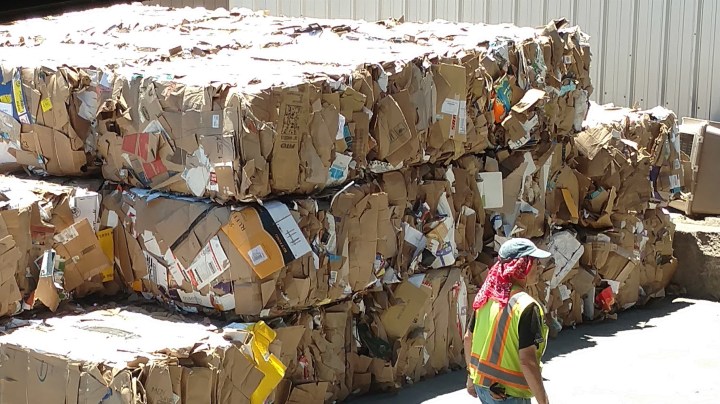
The most lucrative recycled item is aluminum, or aluminium for those in the UK. Lucrative is the key term for recycling. If it can’t be sold, it won’t be recycled. The hot recycling items vary as trends and technologies change. The aluminum bales shown below, each between three and four feet tall and solid as a rock, currently sell for $2000 apiece.
 The surprise news for plastics is, Ignore the Triangle. The triangle was originally designed to make recycling easier, but manufacturers have so many different types of each of the “numbers” that the hand-sorters don’t have time to read them. One scourge for recyclers is the dome container box, a clear box used for muffins or cupcakes, and many other items. These are constructed from many different plastics, some of which are recyclable and some of which aren’t, so all are rejected.
The process matters, too. Another problem with the done container boxes is they are flattened early in the process, after which they become airborne and mix with the paper, contaminating the paper bales and reducing their resale value. This may be only an issue in locations in which the entire sorting operation occurs outdoors or inside a facility open to the elements.
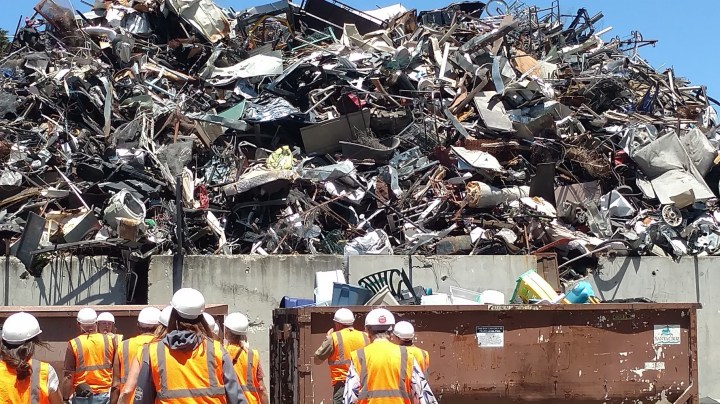
Scrap metal isn’t worth a lot, but our center accepts it from citizens who throw it into receptacles on the honor system. The picture show eight weeks of accumulation. You may be able to spot some dishonorable additions to the stream, such as a mattress. Every sixteen weeks, scrap metal is sorted and sold.
Then there are Bits. Items that drop out of the process are sometimes ground into small bits, which end up in the landfill. Some bits are recyclable. Beer bottle caps are made of tin, which is valuable, but are too small for the conveyors and magnets to capture. If you want your tin caps to be recycled, put them into tin cans and crush those closed.
Never recycle containers that combine plastic and cardboard, such as broth or soy milk containers. The process can’t separate them into constituent parts. We saw one example of an office paper package which was a plastic outer case with a cardboard box inside. If you separate these, the cardboard is valuable, but in this case, they were glued together, making separation difficult. TJ’s coffee containers are not recyclable unless you want to go to the trouble of soaking them, in which case they devolve into cardboard and the unrecyclable liner. That’s more work than most people will do.
Leave the caps on your water bottles, though you must empty them to avoid their being rejected by weight. This is a rule change; the process now allows bottles, caps, and the little ring that joins the two to be recycled. Separate glass bottles from their metal lids so the two can be sorted into separate streams.
Speaking of sorting, there are a few videos of the visit on my youtube channel, Jody Griggs, including those amazing hand-sorters at work.
 Culminating Triad
I vote for a comparison trip to the SF recycling compound, just for interest.
LikeLike