At the Seymour Center, our aquarium curator provides a wanted-species list to a few of the research scientists associated with UCSC who have licenses to pick up animals from Monterey Bay. None of our choices is rare, so we usually get what we ask before the Exhibit In Transition sign has been up too long. There is usually a red octopus on display, a new one every year or so since their total lifespan is only two years.
The red octopus is perhaps the lead attraction in our facility, at least in terms of inspiring hope. Everyone wants to see an octopus, yet an octopus does not wish to be seen, so much searching and yearning is involved. If our octopus is provided with a hidey hole, therein it will lie. Otherwise it might lurk in the dark corners at the very top of the exhibit, behind the signboard. Occasionally it will spread its arms and glide across the front of the tank, imbuing any visitors or volunteers in range with a my-lucky-day feeling. Quite rarely it will remove its bottle stopper and extract food while a human is present, and that person should immediately purchase a lottery ticket.
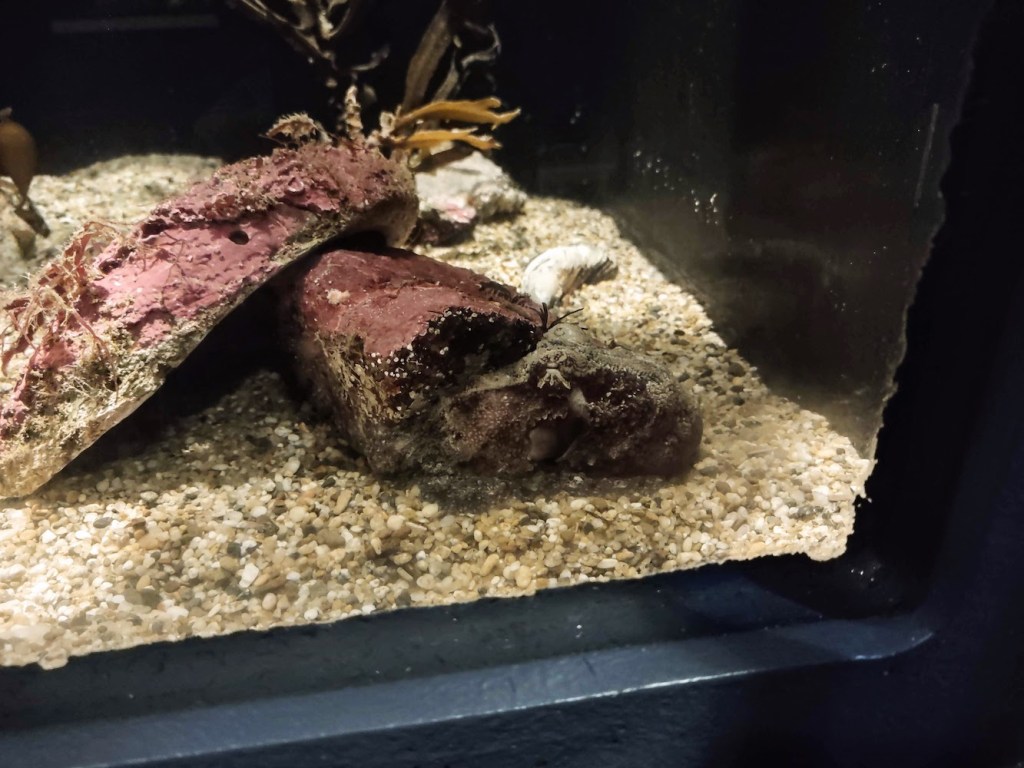
Sea-creature-following readers know that the red octopus is not red, or at least not reliably red. Like all octopuses it can change both color and texture at will to match its background, and our current octopus is a master of this art. It frequently forms a rock and poses right at the front of the tank, fooling all but the most assiduous viewers. In the picture, the small rock at the right is the octopus, just in front of a larger rock, which is partially under an even larger shell. The “octopus rock” is perhaps 5″ wide and 3″ tall.
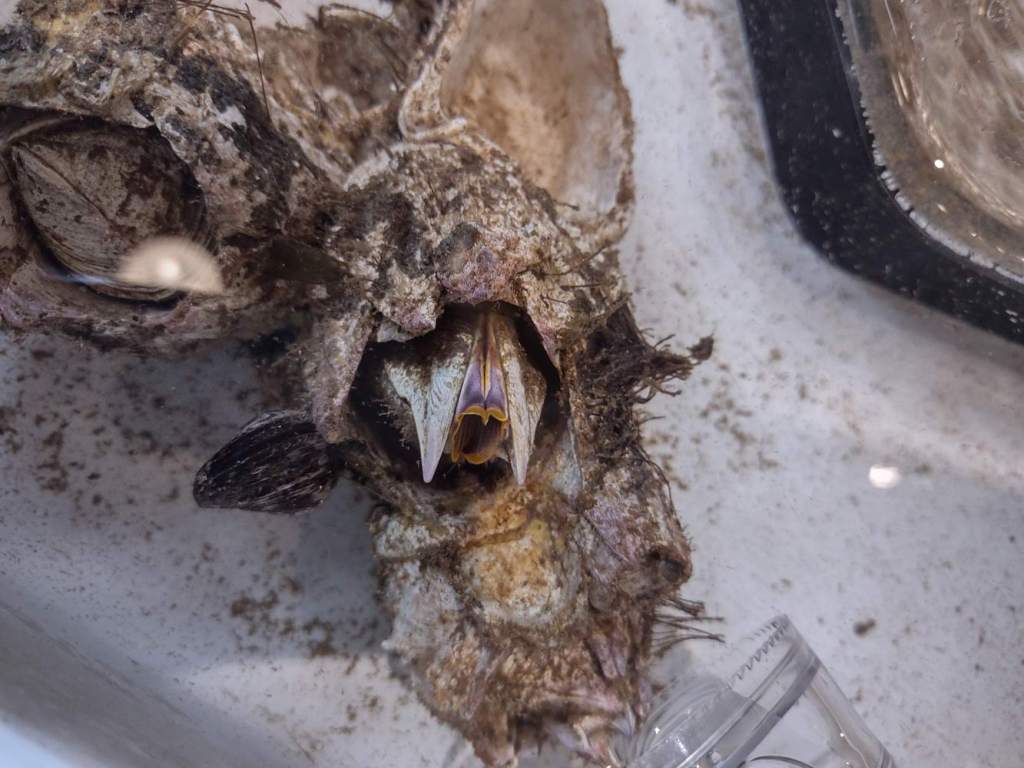
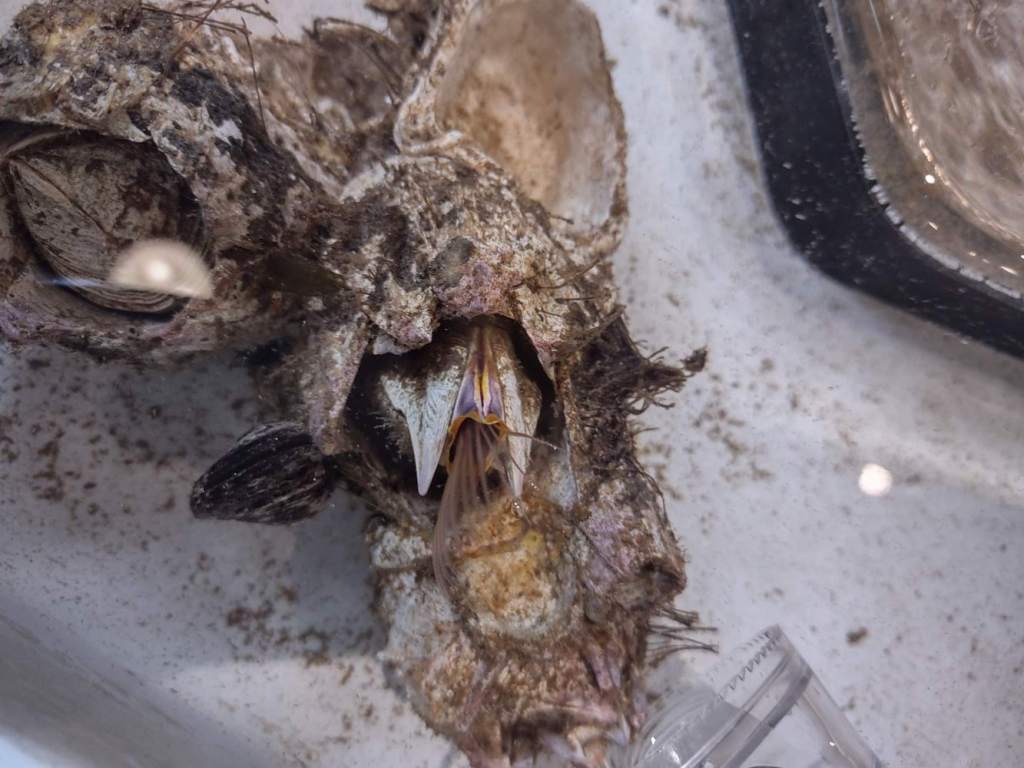
We now have acorn barnacles for the first time, living in a shallow display with no chance of escape, but since their entire bodies other than their feet are inside their shells for their adult lives, they may not realize this. They seem to feed at will, stretching feathery feet into the water to capture brine shrimp, who also have no chance of escape. Pictures below show first resting, then feeding; look for faint fonds extending out the opening between the two spikes. These animals are about 2″ in diameter.
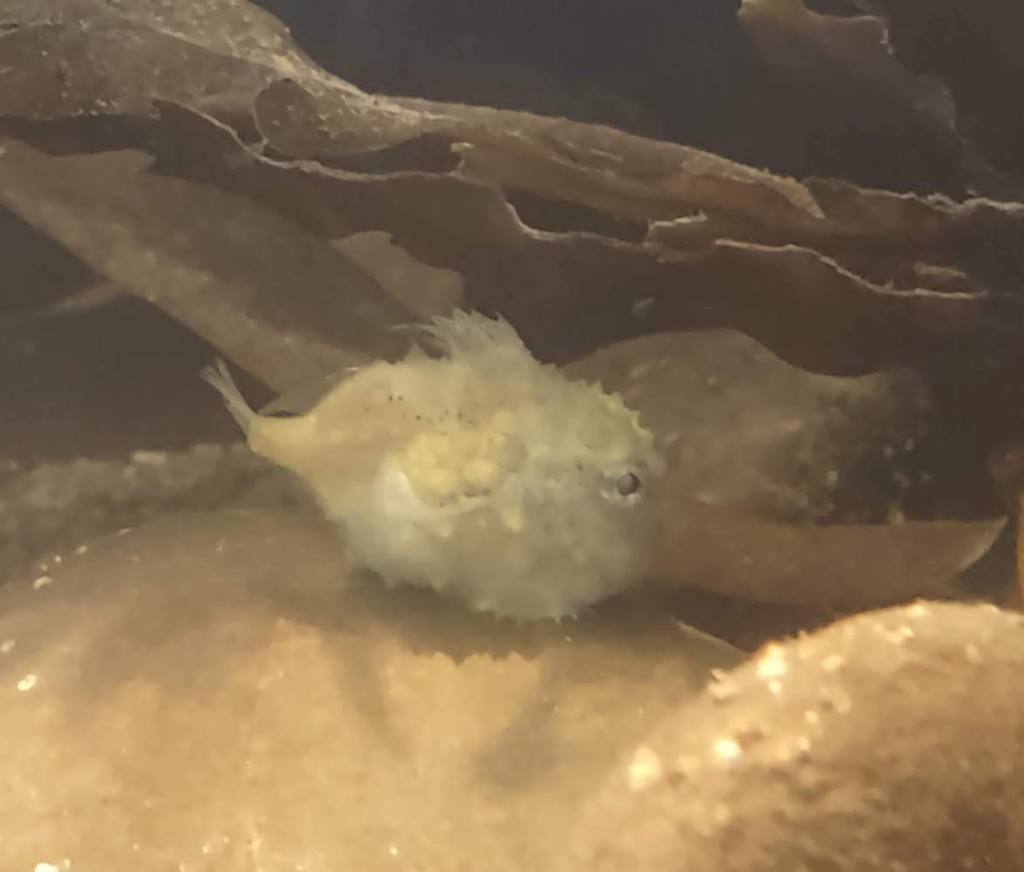
Seymour also keeps trying to display lumpsuckers, but it’s sort of a depressing cycle. Inevitably we start with a tank full of adorable, plump, 1″-long fish-corks wriggling vigorously to swim at a slow pace, hanging out together, even mating and laying eggs. Over a few short weeks though, the numbers drop, and soon they are all gone. We never seem to get any babies either. We volunteers ask why, and the answer is, Lumpsuckers are hard to take care of. I realize all aquarium animals are captive ambassadors for their species, not wild and free creatures living their best lives, but the rate we go though lumpsuckers is a bit alarming. However, our most recent batch has one determined survivor who has been living in regal solitude for weeks: Behold, The Last Lumpsucker.
It’s pupping season for marine mammals, and my TMMC volunteer work has been exciting lately, with multiple rescues and feeds per day, many taking place in the rain and/or darkness, since California is in a decades-high rainy season and the feeding window for these creatures is 8 am to 10 pm. We don’t take publishable pictures, though rescues are often filmed by bystanders. Maybe all this time spent volunteering with animals is why I don’t miss having a pet.


I am a bit overwhelmed with our pets. Our female goat had 3 kids in late February and one of the Australian Shepherd/Cattle Dogs I adopted has to be isolated because she bothered my older dog so much that the dog attacked her and now they cannot be unleashed in the same room. Plus, the goats have now eaten out so much of their compound that I have to let them forage out on the street and that takes up an hour or so of my day. Having a pet is fine but having 13 of them is exhausting.
LikeLike