Whale Watch and MBA Pictures

This is a photo montage of the whale watch I blogged about earlier. There are also a couple from the Monterey Bay Aquarium at the end. All are courtesy of Peter Agar, a photographer par excellence

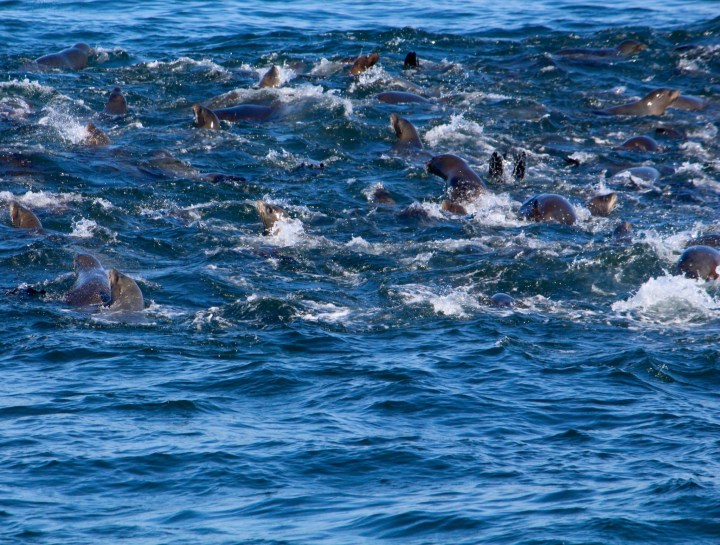
Rafts of sea lions churn up the water while feeding with the humpbacks. They have to get out of the way quickly when the whales surface.

sealionraft1-2017

Humpback tails, close up and lost in the wide blue sea. Individual whales are identified by the barnacle patterns, I think on the underside. You can match your picture online. We were about nine miles from shore.

humpbacktail1-2017

humpbacktail2-2017

Here is the adult ocean sunfish, or mola mola, we saw floating just alongside the boat. It is at least five feet long. It was quiescent, just sunning according to the naturalist, until it dove and swam away. It’s interesting but ugly.

molamola-2017

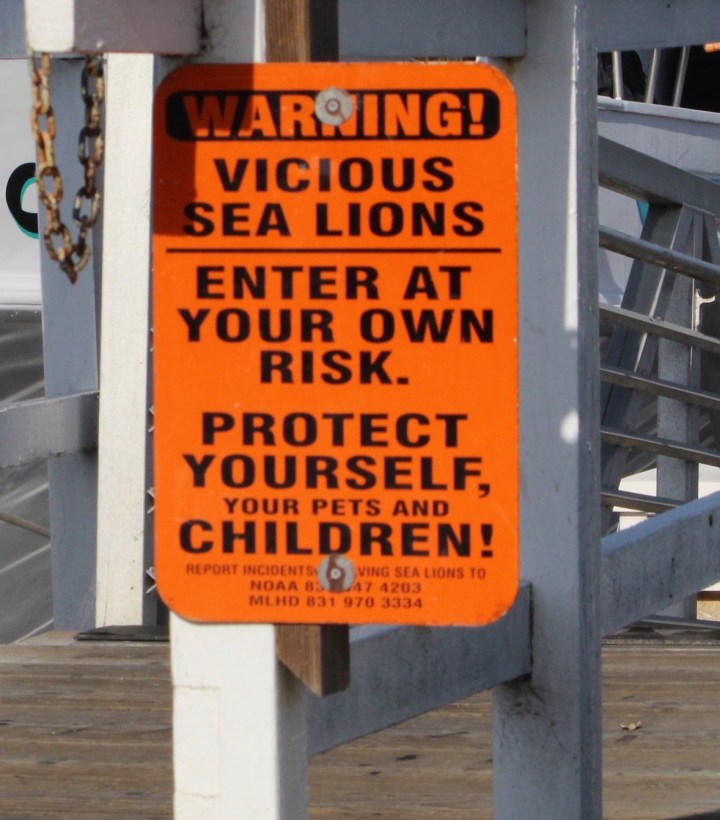
We were puzzled by this sign at the entrance to the mooring area. Sea lions seem awfully nice when you watch them. Maybe they are a little grumpy close up.

scarysealionsign-2017

Here’s just a slice of the giant ocean tank at the MBA. Probably fifty people could stand shoulder-to-shoulder in front of it, and it’s both taller and deeper than this picture shows. The school of anchovy you see includes about 25,000 fish.

MBA Ocean Tank 2017

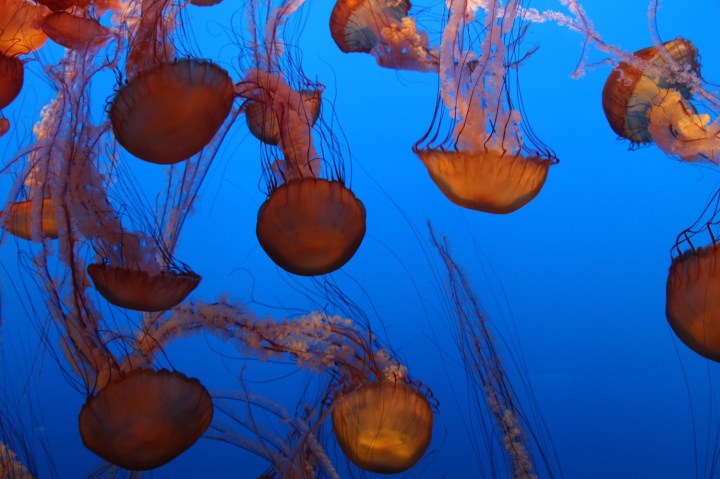
In the Tentacles exhibit, soothing New Age-ish music wafts through a darkened room, flash photography prohibited. These sea nettles are in a tank with an opening about fifteen feet wide and six feet tall, of which a portion is shown. The animals also waft, and the overall impression is meditative.

sea nettles MBA 2017

Even pictures this great can’t capture the full experience of either the whale watch or the MBA. Maybe this will inspire more of you to visit us. Winter is coming.


Finally Felt an Earthquake

According to earthquaketrack.com, California has had

  • 28 earthquakes in the past 24 hours
  • 160 earthquakes in the past 7 days
  • 692 earthquakes in the past 30 days
  • 8,237 earthquakes in the past 365 days

of magnitude 1.5 or greater. I know there have been “feelable” earthquakes in Santa Cruz since we moved here, but I had not felt one until today. I was standing at my computer in the guest room when the shower door in the guest bath rattled spookily for several seconds.

What could cause that? I thought.

An earthquake! I answered. The conversation was silent, but there’s no denying I was talking to myself.

I cruised over to the aforementioned website and learned that there was a magnitude 4.7 earthquake 51 miles from my house at the exact time of the rattling door. To be precise, I did not feel it, I observed an effect it caused. I experienced it.

Most non-Californians think of California as a hotbed of earthquakes, and seismologists here agree. Other people here, though, rarely think of earthquakes. We have lived here fourteen months. In Santa Cruz, a lot of people remember Loma Prieta, in 1989, which caused property destruction and death, especially downtown.* Lots of people in Boston remember the blizzard of 1978, also a fatal and destructive event. People in Boston are about as actively scared of blizzards as people in California are of earthquakes.

Here we also have mudslides and fires, both of which seem more damaging.

I ate lunch on the patio about thirty minutes later, and our hummingbird was chirping up a storm. I remember that birds and elephants sensed the devastating 2004 tsunami, and moved uphill to save themselves. I wonder if the hummingbird knew about the earthquake before it hit.

=====================

* Our complex was extant at the time, and was not affected.

Everybody Eats

Current population of the world: 7.6 billion. It’s expected to be about 9 billion by 2050.

Some would propose a huge expansion of farming to address this. What a disastrous, unimaginative solution. Disastrous for the forests that Earth needs to breathe, habitats for our threatened species, and the future of pollution and antibiotic resistance. Unimaginative because, seriously, modern farming is so crummy, is that really the best way we can think of for producing food?

Modern farming is crummy? I thought it was supposed to save the world! It was, but instead it’s an engine to concentrate wealth at the top. A lot of our farmland produces inedible corn, used for ethanol or for High Fructose Corn Syrup or for cattle feed. The ethanol is mixed with petroleum products, extending the life of the extractive energy industries and cutting into the change to renewables. HFCS drives the processed food industry, which is wreaking habit with our health. Feeding cattle corn makes them sicker, since they are supposed to eat grass, so they need more antibiotics, which are then excreted into the environment, where they drive antibiotic resistance.

It’s sort of like big pharma. Could it be finding cures for rare diseases? It could, but instead it’s an engine to concentrate wealth at the top. The focus is on drugs that can sell widely. We need a new antibiotic that we save for extreme cases, which means it won’t be put into every cow, which means we aren’t going to get that, or any other low-use drug. We’ll get another sex drug for sure, those are popular. To add insult to injury, evidence shows high drug prices recoup many times their research and development costs, and are used to fuel marketing campaigns and anti-competitive acquisitions.

But there is good news here, at least on the food front. To quote from James Suzman’s Affluence and Abundance, published in 2017, We produce so much food that around 440 pounds of food per person currently alive ends up in landfills every year–enough again to adequately nourish another five billion or so of us. We don’t have a production problem, we have a distribution problem!

That we can solve. We are really good at shipping things.

Neolithic Revolution: Meritocracy

During the at most 7% of humanity’s time on Earth, or to put it another way, in the 10,000 years since the Neolithic Revolution, we have acquired two things we never had before: income inequality and gender inequality.

As you may remember from the beginning* of the movie, The Gods Must Be Crazy, Bushmen, some of whom are modern-day hunter-gatherers, don’t work very hard and share everything equally. Farmers work very hard, and store surplus for the rest of the year as well as to cover disasters. Imagine a fellow Andy, who is sort of clumsy and skittish, an unreliable worker. Honestly, sometimes it seems the fieldwork goes better when he doesn’t show up! During the winter, he’s hungry, but you’re the one with the food. You have a family of your own, and you all worked hard for those precious stores. Why should you share? You deserve the product of your labor. Andy doesn’t. In fact, Andy is not as good of a person as you are, is he?

That’s the basis of the meritocracy. Some of us are more successful, and instead of sharing, we deserve to wallow in it. Those who don’t do as much deserve to suffer.

It’s not just an unpleasant attitude, it’s dangerous and counterproductive. The person who generates the most lines of code is fast-tracked, even if his code later causes fatal medical radiation overdoes or a helicopter crash (both real examples), while the person who is designing, coding, and testing methodically is merely tolerated. People doing valueless work like marketing and hedge fund management are compensated over people who care for our elderly and pick our crops. If your house burns down, do you get help? Only until the next headline, and good luck getting your job back after you miss a couple of weeks. Someone else managed, where were you?

Farming led to objectifying women also. A lot of farm work requires upper body strength, and all of it requires lots of labor, so big families became an advantage. Women’s role on the farm was mostly to produce and care for children, and since women were indoors anyway, they took on the housework. Being mostly indoors removed the women from other public work, such as participation in community decisions, and eventually let to many becoming protected chattel. All modern societies have an echo of this, and some still practice fairly extreme versions.

As a parent of millennials, I know that most of them are strivers trying to find their place in an economy in which unpaid internships and wages divorced from productivity are embarrassingly touted by slavering corporation managers and  university faculty, automation is claiming entire industries that once provided human employment, and the  24/7 work ethic has only increased inequality, accumulation, and churlishness. As a group, these young people tend to want to find meaningful, beneficial work, and to truly balance the time spent on work and non-work. And honestly, with fewer jobs in our future, we will all need to work less. The way humans used to live.

===================

* The beginning of the movie was more or less accurate, at least the part about the Bushmen.

Neolithic Revolution, Step 2: Rachmaninoff and Polar Bears

HGs (hunter-gatherers) in sub-tropical Africa* around the time of the Neolithic Revolution were likely similar to the ones remaining today. They live comfortably with little hunger, even though only a portion of the population works only a portion of the time. They migrate seasonally within a known range, which they consider their land. They are fiercely egalitarian–a skilled hunter is teased, not praised, to keep him modest–so that everyone shares equally in any bounty. They view nature as benevolent. Their deities are more-or-less peers: you don’t want to anger the gods, but you don’t expect them to be casually cruel. Mass death is unknown outside of interference from modern-world wars or diseases.

FWs (farmworkers) of the same period were likely similar to subsistence farmers today. They prepare the field, plant it, tend and protect the plants, harvest, process and store the food, build storage areas, maintain tools, and tend animals, in addition to household chores and childcare. Extensive planning is required at every stage, yet an entire year can be wiped out by a weather event, pest, or marauder. Historically, these societies appear to suffer periodic collapses that reduce the population by 30% to 60%. They know fear.

Which is to say, FWs do not view nature as provident. Nature means weeds choking your shoots, beetles destroying your fruit, wolves killing your cattle. Nature must be kept at bay by work, hard work, constant work. Their God–I’m going with Judeo-Christian here, the one I know best–is inexplicable, as likely to rain doom as to bless, and must be implored and obeyed.

That God also doesn’t really approve of sex, have you noticed that? Not germane, just sayin’…

Since there were soon many more FWs than HGs, and since FWs always need more land–for expansion, because of soil depletion or overgrazing, because it’s there–FWs take land from HGs. Even today, many people with FW value systems don’t view the wild living spaces of the HGs as being in use, or perceive any need for plants and animals that only thrive in non-cultivated habitat.

Not much of that remains, because, as you know, the FWs prevailed, big time. I guess God’s disapproval didn’t stop them from having sex after all.

So here we are, working our rumps off, succumbing to diseases we might not have if we ate real food, seeing wild spaces as entertainment at best and opportunities at worst. Most of us aren’t even farmers!

Is high culture worth it? That’s worse than musing on infinity. I have no ability to choose between Rachmaninoff and polar bears.

===========================

* South America also has a large sub-tropical region, but not many humans had arrived at this time, about 10,000 years ago.

Neolithic Revolution, Step 1: Climate Change

12,000 years ago, the natural cycling of the Earth’s axis ended the Ice Age. That’s non-anthropogenic climate change. Over the next few thousand years of climate volatility, Earth became overall warmer and wetter than it had been for the previous 120,000 years. All humans at the time were hunter-gatherers, which I’ll call HGs.

HGs in subtropical latitudes were affected, but not badly. With about 125 species of plants to eat, each with different water needs, habitats, and seasons, there was always some food available. Climate changes brought stress to animal populations, making hunting easier as the herds clustered around food or water sources or simply become weaker. These humans populations probably got a little hungry during some seasons, and surely grumpy if a fave nosh disappeared, but nature remained provident, and mass death unknown.

In the northern hemisphere, the ecosystem changed completely. Familiar plant species disappeared. Cold-adapted mammals, keystone species, declined and ultimately became extinct. HGs had to work hard. They learned to hunt large animals in teams. They processed unfamiliar plants–grains, pulses, and legumes were hugely successful in the warming climate–to make them palatable. Pasta? They started preserving and storing food. They no longer viewed nature as provident.

Eventually they learned how to culture some plants and domesticate some animals, leading to the birth of farming, aka the Neolithic Revolution. I’ll call human farmworkers FWs. FWs work much longer hours than HGs, work often related to the future–preparing the fields, maintaining tools, harvesting and storing food. Their entire crop can be wiped out quickly, and they share infectious diseases with farm animals. They less diverse diets than HGs, making them less healthy, and a less diverse genome, due to mass death.

On the other hand, when conditions produced a plentiful harvest, FWs thrived, and overall their numbers grew. Quickly, they–we!–took over the world. That’s why we now have HG physiology and FW culture and values. To Be Continued…


Send Me a Sign

During my husband’s and my scouting trip to Santa Cruz during February of 2015, the winter during which Boston hit a new all-time snowfall high of 108.6 inches, the winter that sparked our decision to move to California, I became convinced, while hiking in a redwood forest, that I was being stalked by a mountain lion. Twenty-two months later, having lived in California for three months, I was delighted to encounter this sign at the edge of a UCSC student parking lot.

SIgn UCSC Lion

Proof that there are mountain lions nearby! As it turns out, they do not seek out people, especially not in the middle of the afternoon, so I was wrong about being stalked, but it wasn’t a complete impossibility. Apparently mountain lions are regularly spotted at UCSC, which is also built in a redwood forest, but no students have been lost yet.

This week, this very familiar sign was in the news.

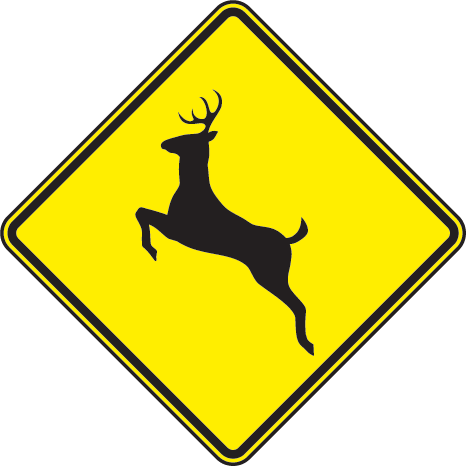
Deer Crossing

In response to numerous queries of the ilk, Why are deer crossing signs placed at such unsafe crossing locations?, the Iowa DOT explained that the signs warn motorists that deer have been seen crossing there, rather than indicating to deer where they should cross, since deer do not read. It must be so much fun being someone who thinks deer read and follow signs! Or someone who cannot find the Pacific Ocean on a world map (29%), doesn’t know local television stations are available for free (30%), or believes the sun revolves around the earth (25%).* America is certainly great when it comes to imagination.

What sparked this sign blog was the message emblazoned on every electronic highway sign during our drive home from the San Francisco Symphony last night: Buzzed Driving is Drunk Driving. Although this refers to driving while tipsy, it put me in mind of driving while high, something that is becoming more common here, in advance of full legalization of marijuana, which takes effect in 2018. I’m often struck by how earnestly MJ users seem convinced that MJ is benign, healthy, joyful, and harmonious in all situations, even those involving control of moving vehicles. We’ve already had a driver eagerly explain to the cop who pulled her over, I’m not drunk, I’m just high. I heard a radio report from Colorado shortly after MJ was legalized there, in which someone experiencing his first legal buy asserted, It’s better than the second coming of Jesus. I can only surmise that he was not particularly religious.

========================

* Percentages of Americans.

Greed and Plenty

Affluence Without Abundance by James Suzman, is filled with bold ideas. The title describes hunter-gather societies in mild climates, only a few of which are extant. Some might call their lifestyle utopia. About 60% of the group has to work–hunt or gather–in order for everyone to get enough food, all of the time. Plenty of food, not starvation rations. Their work takes about fifteen hours a week. People may spend about ten more hours per week doing chores. The rest of the time is for dancing and singing, playing and socializing, wandering and creating art, napping and having sex.

Week is of course a Western religious construct adopted by industrial society and used here for comparison. Westerners spend 40 hours working and another 20 on chores each week.

This description of hunter-gatherers may not be new to you. It has been around since the 1960s and survived a debunking attempt in the 1980s, when the plight of Bushman tribes forced into Western subjugation was prominent in the news; their lives seemed anything but desirable. The utopian characterization, however, continues to be supported by ethnological and anthropological evidence today, such as human skeletal remains showing no signs of starvation or even sustained hunger,

I had read this sort of thing before as well. What I missed was the key concept of not having excess. That is, the tribes work until they have what they need, then they stop. They don’t create excess food, or jewelry, or fuel. If they need or want something, they acquire and use it. They don’t acquire things they don’t need or want.

The combination of no unfilled needs with no excess stuff means there is nothing to trade, nothing to steal, nothing to store, nothing to guard: Affluence, having everything you need or want, without abundance, having extra things you do not currently need or want. As far as anyone can tell, including the very early European explores who encountered these tribes in the 1500s, they have no greed, no inequality, no slavery, and no prisons. Their rare encounters with other tribes may result in violent clashes, but the goal is to space the tribes apart, not to commandeer their territories, people, or resources.

Farming brought humans both excess and lack. Every season there are things to trade, steal, store, and guard, or if not, people are hungry. It also brought us infectious diseases, many from livestock, another scourge the hunter-gatherers avoid. Plus farmers always need more land, so tribes, wildlife, and habitats must yield.

I was surprised to learn the genetic pool of the Bushman of the northern Kalahari, whose lifestyle is relatively intact today, is much more diverse than the genetic pool of Westerners, even though there are so many more of us. The Bushman did not mix even with similar tribes 100 miles away, and their population avoided trauma. Homo sapiens venturing out of Africa were repeatedly subjected to mass killings due to war or disease, which removed significant genetic material from the population permanently.

It does not escape my notice that this “idyllic” life does not include opera, symphony, books, travel, movies, or any of a number of other things I very much consider key to my happiness. People with debilitating congenital conditions probably did not survive. No one could live in harsh environments, limiting the spread of our species.

The hunter-gatherer lifestyle is so different from what we are now that it’s hard to imagine how it could have survived. Yet it persisted for more than 90% of the time our species has existed.
Burrowing In

Harper’s Index this month asserts that 92% of Americans spend 90% of our lives indoors or inside vehicles. Wow! I’m sure glad I’m not one of those losers!

Or am I?

In order to creep below the 90% mark, one would have to spend an average of 2.4 hours per day, or 16.8 hours per week, outside. Yesterday I went hiking in Point Lobos for about three hours, so I beat it, but just barely, and that’s not a normal day for me. Since I injured my ankle, I have been doing more indoor exercising. I think in my first reaction to the statistic, I was picturing 90% of the time sedentary, which is not the same.

A lot of Americans drive to work, work indoors, drive home, eat indoors, then watch TV or do other indoor pursuits. The ones who are exercise-conscious may get an hour outside walking, running, or biking, but may also go to a gym. The ones with dog-walking duties may pick up another hour or even two during the course of a day.  For many of us who do not work outdoors, it’s pretty easy to spend 90% of time inside during the workweek.

Here on Central Coast we can eat, read, and even compute outside, but we don’t always do it.

That leaves the weekend. If you went on a whale watch or participated in a walkathon on the weekend, you were outside for at least a couple of hours. If you went to a concert or did some folk dancing, not so much.

Why does it even matter? Data on this are pretty scarce. One risk is indoor pollutants, which are surprisingly ubiquitous; opening windows helps a little. Our circadian rhythms are set by exposure to sun cycles. Our skin manufactures vitamin D when exposed to sunlight. Some studies suggest that excess time indoors can lead to paranoia or depression. Others indicate people may be invigorated after exposure to nature.

I was feeling that exhilaration yesterday at Punta de Los Lobos Marinos–yes, the animal we call sea lions is named sea wolves in Spanish. We were taking pictures while commenting, The pictures won’t do it justice, and I thought, The pictures won’t do it justice because it’s the wind and the sounds and the smells and the wildlife and the sensation of being in a vast space that makes the view meaningful.

Here are a few shots from my cell phone. Maybe they will inspire you to go outside for the full experience.

Point Lobos Blue OceanPoint Lobos ArchPoint Lobos FoamPoint Lobos Blue Pool


On Your Toes

Which intersection control works best:  a traffic circle, a four-way stop sign, or a traffic cop? Assume an orthogonal four-way intersection with regular but not grid-locked traffic, and that everyone knows and obeys the rules of the road. This is an interview question I read about today.

Like many interview questions, it has a goal: to determine the interviewee’s management style. Most of us want to work for managers who choose the traffic circle, which allows the most autonomy and decision-making for the cars (workers) with the least explicit control. Rule-based managers like the stop sign, which is less ambiguous, while authoritarians want (to be) the cop. In some cases, of course, different management types may be more appropriate. There is also a right answer*, for expediting traffic flow at least.

When I was interviewing engineers, back in the day, I used to like to ask, Why is a manhole cover round? The more tense the candidate, the more this question would be resented, but that’s not why I asked it. I just wanted to find out how creative they were. There are many, many answers. Just think about manufacturing, shipping, moving, and installing a manhole cover, as well as what it’s covering: the circle is best in every case.

A friend who worked in management consulting told me that interviewers would ask a candidate to estimate something, to find out both how she thinks and what she knows. Our family occasionally used this as a game at the dinner table. For example, someone might say, I wonder how many pet dogs there are in the US? Then we would start to figure out what we needed to know, and guess the numbers. For this particular question, you need to know the population of the US, how many households that represents, what percent of households have a dog, and how many dogs each has on average. If you work together, as a discussion, an alert group can usually do pretty well by talking it through. Check the answer on the Internet–after dinner!

Dinner with the family is usually less stressful than an interview, though I actually enjoy an interview most of the time, especially one with a chance to apply my brain to a creative question.

==================================================================

* Traffic circle keeps traffic moving best.