Can’t Face the Hazing

The current Atlantic Monthly includes an article by Caitlan Flanagan on the hazing death of Tim Piazza last February, and I can’t read it. Flanagan is an author whose stories I usually enjoy, even though our political views differ. I inform myself about many painful subjects; just today I listened to shocking, horrifying details about the genocide of the Rohingya, something that is happening right now. But this one I couldn’t face. I made myself start it, but stopped reading after two paragraphs.

Maybe it’s because Tim was only a year younger than my younger son. Maybe it’s because his death was college-boy-excess related, and I know a lot of young men in or near that age group. Maybe it’s because fraternity hazing deaths of young men continue to happen with no justice and no changes, and this case is no exception; recently the judge dismissed most charges, including all the manslaughter ones. Possibly it’s because I just don’t want to think about what I imagine is the worst thing that can happen, losing a child.

It’s interesting how our psyches protect us, or most of us, from despair. We either find an optimistic angle, or we don’t face the situation at all. When my husband had a medical emergency that could have been fatal, I denied it for hours, not intentionally, but instinctively. Only later did the fear creep in, and by then I knew he would survive it, an optimistic result by definition. In the Piazza article, my mind seemed to decide for me that I should protect myself from it, and I couldn’t override that.

I’ve heard it said that humans cannot conceive infinity of either space or time–or, more accurately, of spacetime–and that if one of us did, she would just lie down and stop, overcome by her own insignificance. I can reason my way around that thought, and even find amusement in it. It’s true, though, that most of the time I set infinity aside. I would not enjoy being an astrophysicist, constantly confronting it.

Apparently there is no limit on how small things can be either; physical space is considered to be infinitely divisible. This sort of infinity comes up in math, too. One can keep counting infinitely, of course, but one can also fit an infinite number of numbers between any two numbers. Math actually defines a number of different infinities.

Notice how my thoughts have carried me far from my original aversion. It’s self-protective. Still somewhere far inside my mind, I know there is a nugget of sorrow, very deep sorrow, for Tim, for Tim’s parents, for the Rohingya, for all the victims of all the wars and genocides I have ever heard about. Most adult humans, I think, walk a narrow, psychic line between forgetting and being overwhelmed. It’s imperative not to do either.
October Staycation, Shadowbrook Edition

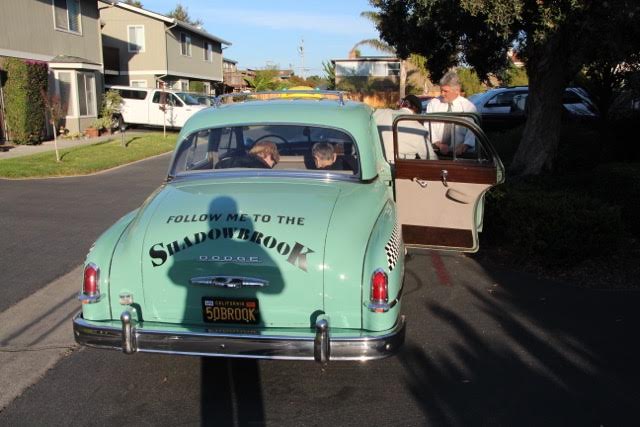
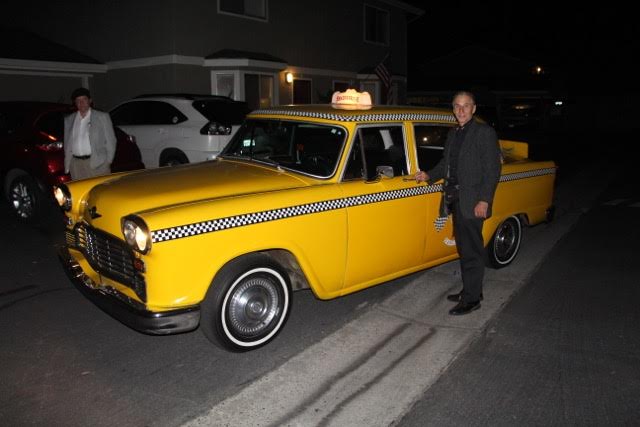
Although it resides proudly in Capitola, Shadowbrook Restaurant, in my view, embodies the vibe of Santa Cruz more than anything except the wharf and surfing. It’s funky and quirky. Located on a steep hillside alongside Soquel Creek, it is composed of at least five separate dining areas at different levels, each with its own personality; lush gardens and pathways; a tram between the restaurant and street level; and complimentary antique taxi service, if you live within three miles.

We were able to take the taxis both ways. There were no seat belts of course, but each driver traveled slowly: This service is basically a moving advertisement. I’m not a car person, so I’ve already forgotten the details, but perhaps you can discern these from the pictures. I think the model year of the green one was 1954 and the yellow one was 1962… As you can tell, when we left it was light out, and when we returned it was not.

SB taxi-1

SB taxi-2

Wandering through the gardens on the way down to the restaurant, you are surrounded by tall, lush plantings that give a feeling of enclosure and coziness, a feeling that extends into the dining areas, although some are high-ceilinged. From the tram platform at the street level though, there is a glimpse of Capitola beach.

SB ocean view

People who live along the creek can arrive by boat. Casual diners can order pizza or sandwiches in the Rock Room. The rest of the rooms serve standard California cuisine and require reservations. We chose the Garden Room, which has a greenhouse feel, including an indoor tree rising through the roof. Other choices I remember are the Redwood Room and the Fireside Room. There is at least one more room, which extends over the creek.

The food is fine, but the focus of Shadowbrook, as you will have surmised, is the experience. It is the local go-to spot for occasion dining; most folks have been at least once, and remember it fondly. The staff members treat you as though this were your big night out, and are happy to help you celebrate.

In Santa Cruz, the funky is admired over the chic, which I like. There is really no celebrity culture here, either. I remember seeing Oliver Stone in the Blue Dragon in Boston one night. The restaurant denizens were abuzz; someone had heard he might be coming, and people were excitedly sharing the news in the (co-ed) bathroom line. Bostonians are too well-behaved to approach such a person, but I would venture no one missed him walking to his table.  In Santa Cruz, I feel this would be a non-event.

Creepy Sleep Scientist

Terry Gross interviewed a sleep researcher on Fresh Air who seemed friendly, personable, and kind, yet the interview outraged me. At the outset, Ms. Gross confessed she had not slept well the previous night, and this luminary assured her he could detect the evidence of brain dysfunction via her voice in his headset. She responded with a detectable quaver; laughing nervously, she asked about catching up on sleep during the weekend. Dr. Drowse assured her that this would not work. When she ventured to ask the consequence of insufficient sleep, he had one only:

Premature Death.

From here, things proceeded downhill. In a calm and friendly voice, he assured us:

  • If you don’t sleep eight hours every single night, you will not get sufficient sleep that night, and that deficit can never be made up.
  • Sleep should occur at the same time every night, seven days a week.
  • You may “sleep” after drinking alcohol or taking Ambien, but this is a sedative effect, not real sleep, and does not count. Alcohol consumption must stop at least three hours before sleep time.
  • You may think you are unaffected by caffeine, but you are wrong. If you drink caffeine after 2 pm, and later you “sleep”, that is not real sleep, and does not count.
  • Light levels are important. At least two hours before sleeping, you should be in low light, and not view any backlit screens (including TV).
  • If you wake up during the night, get out of bed and go sit in a dimly lit or unlit room until you feel sleepy again. No reading or screen time allowed.

How could anyone who works multiple jobs, or does shift work, or works in the gig economy, or has to both work and be a caretaker, or cares for both children and elders, ever get enough sleep under these constraints? I felt that with every gentle, deadly word, Dr. Snooze was inserting stress into the lives of so, so many people, people whose lives are already on the verge of spinning out of control, people who are working hard and holding it together only to be rewarded by

Premature Death.

I have less sympathy for the insomnia-afflicted Ms. Gross. I imagine her work could be easily scheduled during the day and doubt she has a second job. Moreover, I strongly suspect she could watch less TV. This is a woman who curtailed the interview of the author of Black Man in a White Coat to squeeze in some celebrity with a season opener. When speaking to an actor, her voice glows with admiration. She is well-versed in the minutiae of every episode, the life story of every cast member, and even the sort of “insider” information found in the National Enquirer. She must be watching shows eighty hours a week, but is it worth it? She could be sleeping.

It Happened One Night

Monday seems like the last care-free day. I was beset with first-world concerns, such as securing a sagging curtain rod and composting tomato plants, while wondering whether the ‘Stros v Cubbies World Series could really happen. The condo board met at my house that night, earnestly debating policy on clotheslines and EV charging stations.

Then I got the call no one expects. My husband suffered a medical emergency. Was it only yesterday? The hours in-between have been a blur of kind strangers, firemen, waiting rooms, clinicians, gurneys, hospital beds, beeping machines, plastic tubing, fluorescent lighting, acronym-laden tests. He is stable now, but I suspect life may henceforward be divided into before and after Monday.

What I observed about myself was how resistant I was to accepting the reality that this was a Serious Event. I raced out to retrieve my husband and, I thought, bring him home. I didn’t call 911, and I was surprised by the seriousness of the EMTs. I thought the urgent care clinic might do just as well as the hospital, then I thought the overnight observation period would be cursory and uneventful. I wasn’t cavalier, I was complacent: Well this isn’t fun, so let’s get back to our regular lives, as we surely will do soon, as we always do.

A shadow stretches a menacing appendage into our lives. Will it grow into a constant companion, or recede into a faint memory?

I have been honored to know, now and in the past, many inspiring examples of friends, family, and strangers demonstrating courage, endurance, optimism, stoicism, generosity, persistence, and hopefulness in difficult circumstances. I hope I can move forward with similar gumption.


October Staycation, Vineyard Edition


Route 17 between San Jose and Santa Cruz sparks dread in the hearts of many Californians, though thousands of them use it daily, many traveling over the speed limit. It’s a two-lane-each-way paved state highway with stripes, lights, railings, a central barrier, and copious signs, many of which light up. On the other hand, it follows a sinuous path over the Santa Cruz mountains, and hosts accidents weekly.

Friends visiting from afar provided an excellent excuse for a staycation recently, so we went to a wine tasting at a hilly vineyard. Ridge Founding SignTo get there, we traveled on a truly harrowing road on the Cupertino side of the same mountain. This road was one-lane-each-way except for the spots where it was one-lane-shared, very twisty, often sans shoulders, and bounded on the outside lane by a sheer drop. Precipice would not be too strong a term.
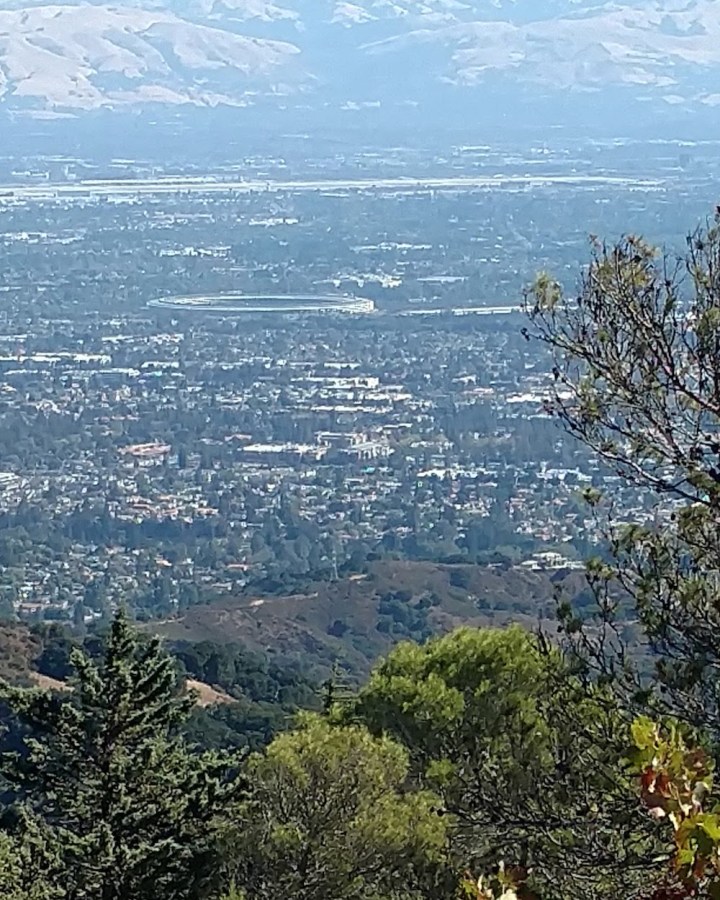
The view was expansive, including the Bay and its eastside mountains from San Jose to San Francisco, essentially all of Silicon Valley. This slice is cropped to feature the Apple Ring, which some call the Spaceship, a campus housing over 12,000 employees.

Apple Ring from RidgeScattered above and below the vineyard were a handful of private homes, some including private vineyards. This is where you could live if your company “hit”, and you don’t mind traveling a long and winding road to the grocery.

Mogul Home with Private VineyardSome grapes were still on the vine October 2, though they were harvested later that week. These are merlot, and we got to try one. We tasted a yummy merlot wine as well. I don’t think it was in the same class as the ones disdained in Sideways.

Merlot on vine Oct 2

We tried for back roads on the way home and got a little turned around. My husband specializes in near-precipice driving, so I was navigating. Taking back roads essentially means ignoring the navigation program, and while I did so for a while, it eventually tricked me into rejoining the highway. Despite many decades spent without a handheld puppet master, I am now firmly in thrall.

Tattoo Science

I notice a lot of tattoos on people these days, though not on me. Many are on Millennials, though not on my sons. Many of the tattoos are very attractive, or moving, and I am happy to admire them on other people, especially Millennials, for all of whom I try to play the role of Supportive Mom.

I am still learning about the microbiome, and continuing to be amazed by how much has changed since I studied biomedical engineering, roughly during the horse-and-buggy days, which lasted longer in Texas. Recently I encountered macrophages, which were a type of white blood cell associated with the immune system in my old texts. They now are thought to permanently reside in all tissues, not just in blood, and to be responsible for removing old cells and toxins as well as invading microbes. They take various forms in different tissues, so for years scientists did not realize those were all related.

That assessment could change tomorrow. Science is always challenging itself, and frequently revising what it recently thought. That confuses non-scientists sometimes. Real scientific revision arise from using the scientific method, which differentiates them from alternate facts.

In any case, skin macrophages turn out to be primary storage for tattoo dye. A tattoo is a wound, or I suppose a lot of wounds, and skin macrophages rush to the site to repair the damage, lapping up as much invasive dye as they can hold and containing it, essentially forever.

Most skin cells slough off, as you may have noticed. Tattoos don’t, because they are injected into the dermis, the second skin layer, and because they are stored by the immune system. So an artful tattoo is also a self-inflicted infection, viewed through the epidermis.

Some say that tattoos strengthen your immune system, the more the merrier. That’s based on some very specific results from a single lab, though. I think we need additional research before we declare tattooing to be the Cure for the Common Cold.

Whales and Sea Lions and Ocean Sunfish, Oh My!

Today we went on our third whale watch in thirteen months, and it was by far the most amazing. Whale watches are defined by serendipity; yesterday, the same watch we went on today saw four whales. If we had seen four whales today, we would have been happy with our trip. But we saw many, many more.

I’m sorry I don’t have any pictures. I was just agape, not taking pictures. There are a few at http://www.blueoceanwhalewatch.com/monterey-whale-watching-photos/, but they don’t do it justice.

Leaving the harbor was lovely, with Elegant Terns diving successfully for anchovies, numerous sea lions braying lustily, and sea otters both eating and grooming, their primary activities. Our naturalist was very knowledgeable, too. But nothing much happened for the next hour.

We were initially exhilarated by crashing over increasingly steep waves and viewing moon and nettle jellyfish blooms, but those aren’t what we came out for, so we gradually grew discouraged, especially when it was announced that there was no sign of whales, and that we were entering the fog bank hoping to find some near the submarine canyon. In the fog, we could hardly see twenty feet. Even the appearance of a rare fog bow was scant comfort.

Suddenly, the fog cleared and we were treated to a raft of hundreds of sea lions diving to feed after three to seven humpbacked whales, with ten or so other whales in the vicinity. For at least half an hour we lingered, watching the closely-packed sea lions dive and resurface; whales single, double, and multiple blowing, arcing gracefully over the surface, and flipping up their tail flukes as they dove; churning white water as sea lions leapt aside to avoid a whale surfacing; porpoising legions of sea lions, often headed directly toward us; huge whales near our boat, close enough to hit with a ball, though no one threw one. Awesome is the only word.

This whale and sea lion feeding frenzy made me so hungry that on the return trip I retired to the cabin to eat my packed lunch. The boat’s motor roared and the sea sped by outside my window. Suddenly, the sky was split by a whale soaring out of the water–a breach! We slowed to view multiple spouts of a pair of humpbacks, but the leap was not repeated.

Later, we saw an eight or ten-foot-long mola mola, or ocean sunfish, floating on the water’s surface alongside our boat. It was logy–in distress according to the naturalist–but fascinating to view at close range. It’s apparently a jelly-feeder, and more jelly blooms followed.

During the final portion of the journey, we encountered several groups of humpbacks. Spouts everywhere. Can we go five minutes without seeing a whale? Look, another one there–yeah, seen that. No one could keep count of the number of whales sighted on the three-and-one-third hour trip.

On our next whale watch, if we don’t see a thing, I won’t complain. If I forget and do so, I apologize in advance.

Microbes are Us

For years I’ve been wondering what is going wrong with our health. The legion of diseases that have moved from rare to epidemic in one century is staggering: obesity, diabetes, autism spectrum disorders, asthma, inflammatory bowel disease, food allergies, lupus, Crohn’s disease, Alzheimer’s, cancer, and depression. To name a few. Since these diseases aren’t transmitted from person to person directly, they are collectively referred to as non-communicable diseases, or NCDs.

Some sources estimate over 50% of Americans suffer from an NCD. This level of illness makes a mockery of actuarial tables, leaving insurance companies in a state of fear even without government shenanigans. You have not imagined the growing burden of health care cost being shifted to you.

I’ve been prepping for a new job in the gig economy that involves writing about the human microbiome, or MB. Current science–and this is new science in the 21st century, so new that my spellchecker keeps flagging the term-posits widespread changes in the makeup of the individual MB as the source for our NCD explosion.

The human MB refers to the trillions of microorganisms that live on and in us. They are hard to count, and so are cells, but there are probably as many or more microbes than cells in a person. Of course microbes are much smaller. Once thought to be mostly benign and occasionally pernicious, they now appear to play critical roles in our immune systems, diets, blood chemistry, and moods.

Until less than 100 years ago, the MB was seeded in the birth canal, then supplemented through breast feeding. The MB maintained healthy diversity lifelong through exposure to microbes in the soil, water, and air, as well as from other animals. The type of MB that keeps you healthy likes to eat plant fiber, as well as some fermented food; interestingly, every human culture has created an appropriate fermented food, including sauerkraut, kimchi, and sourdough.

In the late twentieth century, a perfect storm of technological breakthroughs and changing cultural mores coincidentally targeted the healthy MB before scientists even perceived its existence. Temperature-controlled houses and workspaces, as well as a rise in desk work, led to us spend more time indoors. Personal hygiene and home cleaning standards and products reduced the diversity of the microbes remaining. Fiber-light processed foods became ubiquitous; for the most part, fermented foods with live microbes weren’t offered in processed form. Caesarean births rose, and breast-feeding rates fell. And with the best intentions, when we found antibiotics could cure very sick people, we started also giving them to not very sick people, then to people who might get sick, then to animals we were raising to eat, which spread them to our rivers and fields.

Some babies never established a good MB, or lost it early to childhood diseases treated with antibiotics. Many adults stopped replenishing our MBs with outdoor exposure, or stopped feeding them healthy food. Some MBs are unhealthy. The processed-food loving, low-diversity MB is not interested in building up our immune systems, and actively works to keep us both overweight and oversugared.

This is a very large change, a large idea to get used to, an idea with massive implications. I’d say it’s right up there with Earth is not the center of the solar system. Unsurprisingly, some clinicians are resisting it, and you may as well, especially if you’re a boomer. After all, we lived through the era of science saying smoking was healthy, and the introduction of the really-bad-for-you food pyramid.

But something is causing this mess, and I think this is the most hopeful theory we’ve had in a while. After all, your MB can be altered.


This is a huge topic, and pretty new science. Just like on your kitchen counter, there are good and bad microbes in and on your body, and when you destroy the good ones, the bad ones can take over. This is what has happened in a nutshell. Widespread antibiotics in our medications, food, and environment have weakened the good ones even in small children who are still establishing. Add to this availability of processed foods that are preferred by the bad microbes; work and homes that keep us indoors, away from good-microbe-replenishing soil, wind, and water; cultural cleanliness habits that kill microbes on our bodies and in our homes;


Maybe I’m Not an Environmentalist

Are we saving the Earth, and if so, why?

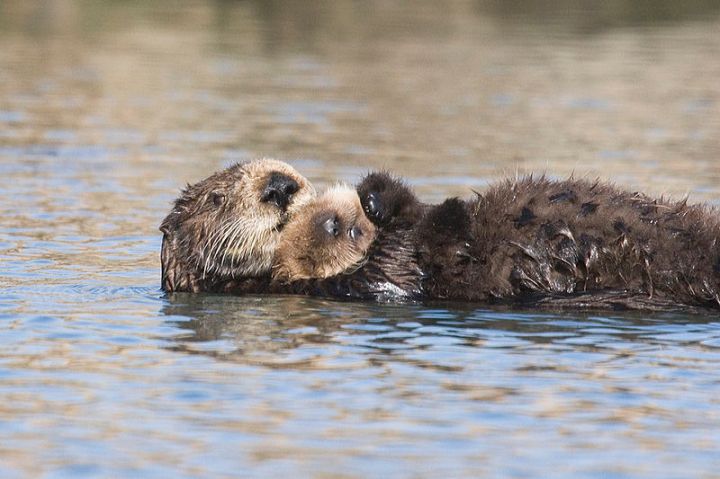
The focus of the environmental movement lately seems to be climate change, but honestly, it’s hard to feel passionate about avoiding famine, plague, and war, some year. For inspiration, I need a more immediate concern: Carbon from the atmosphere is absorbed by the ocean, increasing ocean acidification, which dissolves the shells of marine animals, reducing shellfish supplies for both humans and sea otters.

Sea otters are creatures I can motivate myself to preserve.

ottersleep

The environmental movement is not only abstract, but also high-tech. I appreciate the benefits of wind farms, but not those placed in fragile ecosystems. Unintended consequences await. These Big Picture Solution people should consider preserving an actual ecosystem, if they can identify one.

Moreover, building huge facilities implies that the main goal of environmentalism is to continue what Dr. Seuss might call biggering. More people, more energy use, more expansion and colonization, more Progress. The goal of biggering the human race is not inspirational.

Human animals are not good planetary companions for wild animals. We seem to gravitate toward destruction–some would call it domestication–of anything that is untouched, that is, non-human. And we’ve been doing this Simply Forever. Plenty of scientists believe that human predation had some role in the extinction of the megafauna such as mastodons and cave bears after the last Ice Age. We’ve been building dams willy-nilly since we were in ancient Egypt, and ejecting pollutants and poisons all over the place since before the Industrial Revolution, although that transformation really upped our game.

Today the Asian elephant, mountain gorilla, Emperor penguin, and Bengal tiger are just a few of many endangered species. Habitat elimination, poaching, invasive species, and climate change are the main culprits, which is to say, humans are the culprits. Why not? Humans don’t need big animals, especially now that most of us get food from farming rather than hunting. We need microbes and bugs to clean up after us, but big animals are just eye candy, albeit inspirational eye candy. Sort of like Art. Do we need Art?

The Bushmen are doing their part! Too bad the other….let’s say 100% of us, since scientific notation has no place in today’s blog. Too bad the other 100% of us can’t need a little less. Meanwhile, if you save a creature, it may not help the climate, but it can soothe your soul. Do we need a soul?

I get to say this because I am a Human. My barcode proves it.


Alexander and the Bushman

Yesterday I finished reading The Alexander Trilogy by Mary Renault, three works of beautifully researched, written, and imagined historical fiction about Alexander the Great. I think I am a little in love with the title character, a person with enormous acumen in military strategy and leadership skills, as well as tolerance and vision rare in those violent times. He died at the age of 32 having never lost a battle. His story still moves, enchants, and astounds us more than two millennia later.

The trilogy depicts the customs and rituals of the time in lavish detail. The clothes, jewelry, furnishings, and decorations of the royal courts would surely surpass those of today in most western capitals, while their assiduous personal hygiene would be similar. The crafts, resources, and people of central Asia were largely at the disposal of ruling families, and sumptuous trappings were indications of status together with prescribed obeisance. Alexander himself disdained such comforts in the field, but used them as evidence of strength and success when conducting state business.

Their civilization appealed to me, and many aspects seemed familiar.

Later I read a review of Affluence Without Abundance: The Disappearing World of the Bushmen, by anthropologist James Suzman, who studied and lived with that African tribe for over two decades. The oldest extant tribe of humans, Bushmen can be traced back an amazing 150,000 years, only 50,000 years after the appearance of homo sapiens. Happily for science, though perhaps not for the tribe, one group of 10,000 was divided into  two parts, one of which continues the traditional way of life, and the other of was resettled into a modern lifestyle. The modern group is dispossessed and suffering. The traditional group is thriving, with an average work week, including food acquisition and domestic chores, of 36 hours, and a reliable 2300 calories daily for everyone, year-round. They get what they need, then stop; they do not accumulate.

Apparently, the required knowledge and flexibility for the hunter-gatherer lifestyle is mentally much richer and more complex than that of the domestic agriculture lifestyle. The Bushmen have nothing except lots of leisure time, plenty of food, interesting and complex work, and egalitarian self-government.

Their civilization also appealed to me, though it was not familiar.

Suddenly I realized that all the beautiful material items I admired from Alexandrian times were available because a lot of people were slaves, or otherwise expending their own energy to enrich others. The accomplishments of Alexander himself, winning wars, creating trade agreements, setting up governments and legal codes, were only sources of better lives for the average human who is intent on accumulation and hence a possible victim of theft, or in danger of enslavement.

If we could eliminate accumulation, that is, greed, could we eliminate hunger, overwork, stress, even war? Good luck with that. It does seem as though most humans have been making choices contrary to our self-interest long before the current era of politics.