Moving Water

We lived here for over a month before it rained, but rain it did, all night Saturday night. We lost a salt and pepper set, a decorative jar of matches which turned out not to be waterproof, and a lot of paper napkins. It hadn’t rained in so long we’d been leaving stuff outside, and just forgot.

Starting Sunday, we have entered a seven-day period of “Minus Tides”, so-called because the low tide level is a negative number. It isn’t obvious to me why it should be negative, but shortly after I looked it up I decided that finding that answer is a bigger project than I want to undertake at the moment. Tides are complicated!

The minus tide is a neighborhood event because it connects our beaches and extends our tidepools. Since we live in a cliff area, most of our beaches are relatively short stretches bounded by rockfalls on either end during low tide, and completely underwater during high tide.  During minus tide, the sea is pulled back far enough that you can walk around those rockfall borders, essentially connecting the isolated beaches.

We have tidepools during all our low tides, where one can see a few urchins and anemones, clams and barnacles, and sometimes chiton. But there were many more than usual today, plus other non-tidepool animals: fish, crabs, and several that reminded me of that gradeschool project, create your own sea creature. Sadly, most of these new creatures were dead. It was interesting but also disgusting, except to the sea gulls. People had theories–the storm? the sea foam? –but no concordance.

The most common new creature both dead and living was something most called a sea slug, although I believe this is a fairly meaningless popular name. It does resemble a land slug, though larger, ranging from the size (and shape) of an ocarina to perhaps as large as a tissue box. Most were black or muted colors, not the dramatic images from the Internet, but very satisfyingly wriggly, with prominent, shiny antennae.

I approached a woman who appeared to be listening to the cliff, and she explained that when you put your ear close enough, you can hear the community of barnacles. It’s true; it sounds like humming or buzzing or clicking, faint but distinct. She also pointed out many other small creatures in the crevices and interstices. A speaking, living, rock; I love it.


Emergency Response

We saw the movie “Sully” this weekend. I wasn’t surprised that I really enjoyed it, because I have a weakness for anything about flying. The surprise for me was the pride in humanity it engendered. We are a really smart species when it comes to emergency procedures! The pilot and co-pilot are plying their checklist within a few seconds of losing both engines. The Brace chant by the flight attendants clearly focuses the passengers on assuming the brace position, despite the fears of both. The ferry drivers see a jetliner in the Hudson and make a Mayday call to the Coast Guard with barely a Look-at-That, then start the rescue in a methodical fashion. The scuba rescuers race for their helicopters practically while the call is coming through (apparently they wear wetsuits on duty). All the responders at the site are calming, efficient, and effective.

I was reminded of 9-11, not least because of the images of a commercial jet off-course in NYC. At some point that day, someone decided that all commercial planes should land, and issued the order, and all the planes landed. At some earlier date, someone must have decided we need a plan in case all planes have to land at once. That may have been based on an expectation of losing the air traffic control system, but for whatever reason, the plan existed, and when it was used, it worked. Pilots clearly know how to decide where to land and how to take turns landing when directed to do so.

My husband recently told me that the US military has an active plan in case of invasion by Canada. My first reaction was to scoff, and to opine that the group with that charter could be eliminated for cost savings. But after seeing this movie, I wonder how I would decide where to draw the line. I suppose a more malevolent foreign  power could take over Canada and invade from there. Someone probably scoffed at the all-planes-land idea, too.

Training seems to be a huge part of the success of these efforts. When people have practiced what to do in an emergency, then that emergency happens, that’s what they do. This leads me to three unrelated thoughts:

  • Perhaps humans are not good at reacting to or analyzing complex systems with interrelated consequences over the long term, such as climate change, because we can’t easily plan or train for those.
  • The US must be doing something wrong in its training of police officers faced by unarmed black persons stopped for minor crimes or suspicion, an apparently routine situation that would surely lend itself to procedure. Prime directive: Don’t Kill Anyone Who is Unarmed.
  • I need to unpack and review my copy of The Worst-Case Scenario Survival Handbook.

Monarch Refuge

One population of Monarch butterflies overwinters on California’s central coast, including here in Santa Cruz. The life cycle of these creatures is extraordinary. The ones arriving now were spread all over southwestern Canada, the US Pacific Northwest, and the Rocky Mountains until cooling weather inspired them to fly here for winter. They will start to spread north and east again in February or March, traveling 2 to 6 weeks before stopping to lay eggs, then dying. From those eggs, Generation 1 will hatch in April and May, fly 2 to 6 weeks, lay eggs and die. Generation 2 will repeat, as will Generation 3. Generation 4, however, will sense the weather change and fly to California, living 6 or 7 months total, completing a journey started by their great-great-grandparents.

monarch1

The butterfly grove I visited is inspiring even early in the season, with only a couple of hundred Monarchs in residence. Or it would be. It mostly was. But for about 20 minutes, a small group was noisy, talking on cell phones, gossiping about work, allowing their children to run and shout. Even if you don’t read the signs about using your “butterfly voice”, doesn’t a viewing platform a quarter-mile walk into the woods, surrounded by vines and trees aflutter, naturally induce calm reflection? Especially when populated by parents whispering to children and adults observing silently, with occasional comments made sotto voce. Clear signals of discomfort were sent by many, but the noisy group was clueless.

What sort of people do this?–even asking that question implies stereotyping. This is a state park; should everybody be allowed to use it for their own purposes, or are some purposes “higher” than others? If those who aren’t naturally drawn to nature are shunned or banned, will that affect voter support for government funding to maintain such areas? Most important, is it even possible for those of us who love nature to explain to, or share with, or introduce the joy of reflective observation to those who just need to unwind after another difficult day at a tedious job?

That it may not be possible, that these divides are insurmountable, is of course the question of this moment in our society. I’m slowly reading a difficult book, “White Trash,” a history of the US which chronicles how working people have been excoriated and demonized by the middle class as well as the wealthy throughout our history for their quite different “take” on life. The current election campaign brings this into sharp relief, with ample daily examples demonstrating that a great many Americans don’t have many views in common with a great many other Americans. A piece in this week’s New Yorker about West Virginia tries to bridge the gap by exploding stereotypes, but founders when explaining some specific views, which I feel will be stereotype-reinforcing for many readers.

Most of us are friendly with people with whom we don’t always agree , and manage to get along by not discussing specifics. Avoidance is not a method for creating public policy though, and I fear Americans don’t agree on what matters in a profound way. If someone suggested music or food stands at the butterfly refuge, I would fight that, not seek a compromise. Intransigence shows up on all sides.


Photo Break

Even though I’m an engineer, I am often a technological klutz. I think I just resist technology, or maybe it’s a love-hate thing. The end of pictures is the worst thing about our ubiquitous small devices, for me.

What can she mean? you are thinking, there are more pictures now than ever. That’s exactly the problem. When I had to print the pictures, and choose the best ones, and put them in albums, I had them. I could readily turn to, say, vacation in Samoa, just by finding the right volume. (Except that I have never been to Samoa.) Now I ignore them. After all, I think, they are in one of these files somewhere. And I’m sure they are, all with the same smugly uninformative names. Hundreds of them.

I am familiar with some of the organizing tools available for pictures, and I use Google Photos in a desultory fashion. I also keep my Gravatar updated (did you notice?).  I like Snapchat, too: Look at this!–and now it’s gone. Most of my cohort are not members, however. So here are a few snaps for the blog audience.

vmask
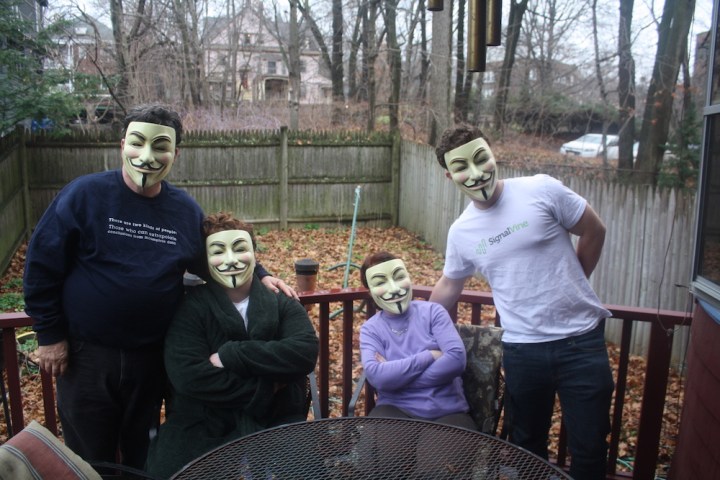
V for Vendetta Fans…
unmasked
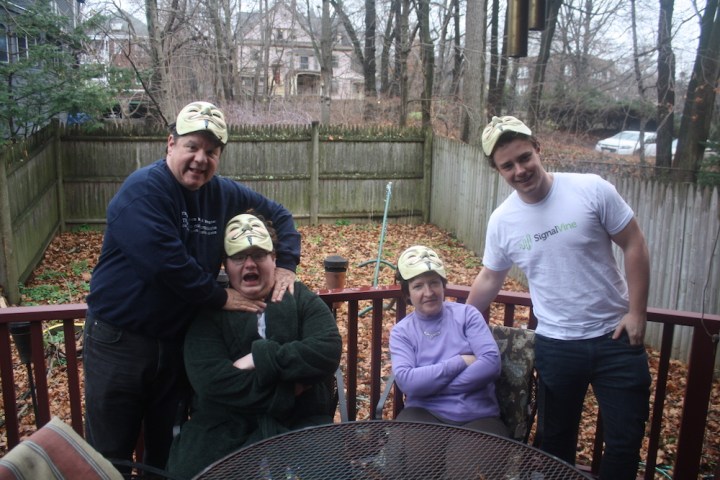
…Unmasked
abraham-from-zippy-shell
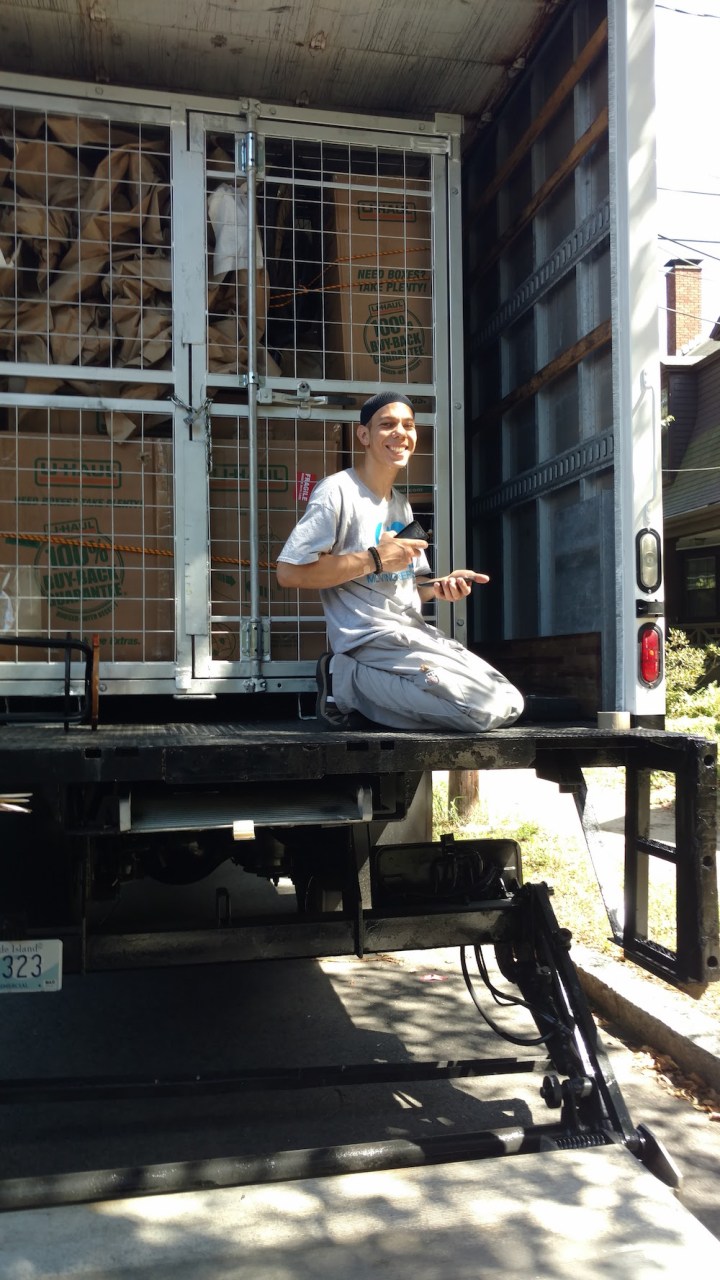
Abraham of Zippy Shell, and most of our worldly possessions.
sinclair
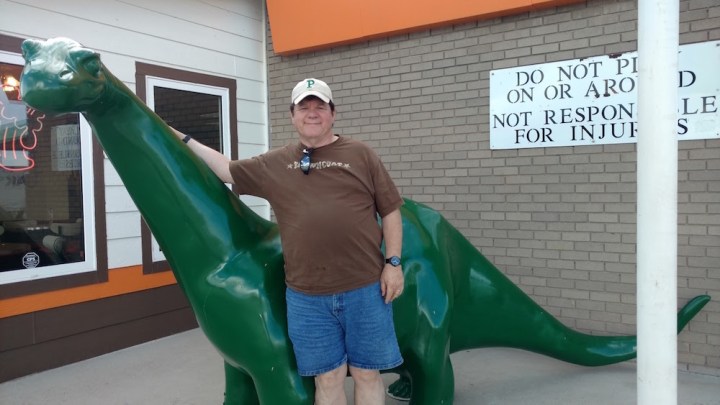
We love Sinclair
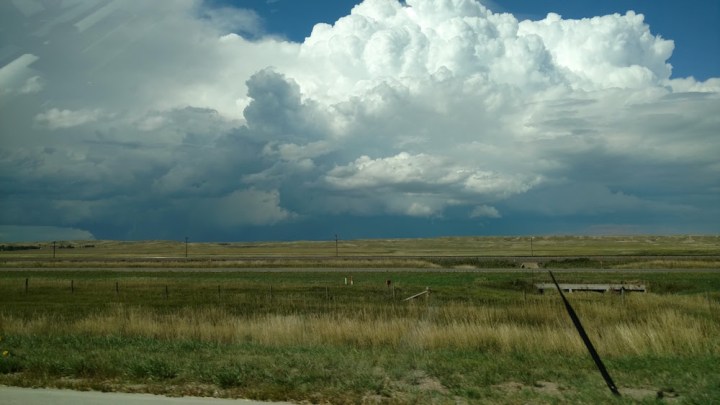
storminbigsky
Big Sky, Big Storm
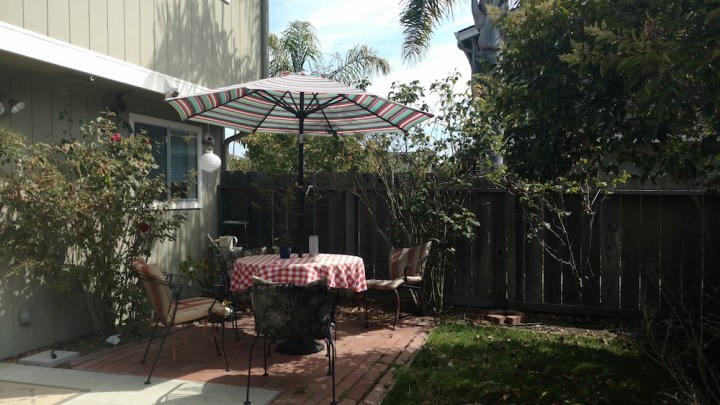
backyard
Back Yard
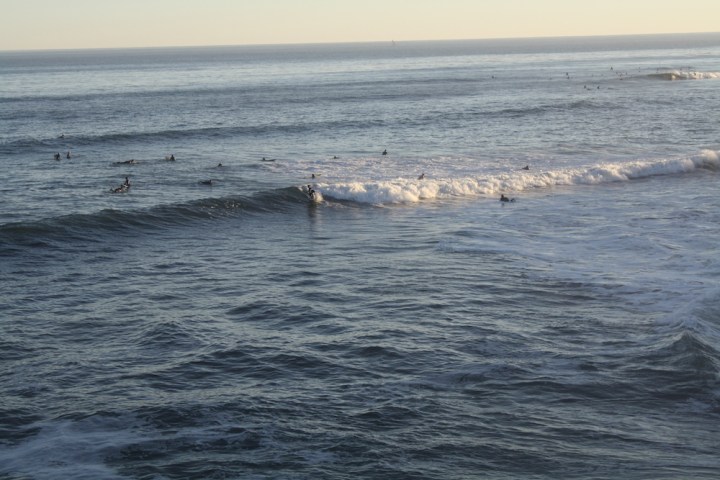
surf-city-sept-2016
Surf City
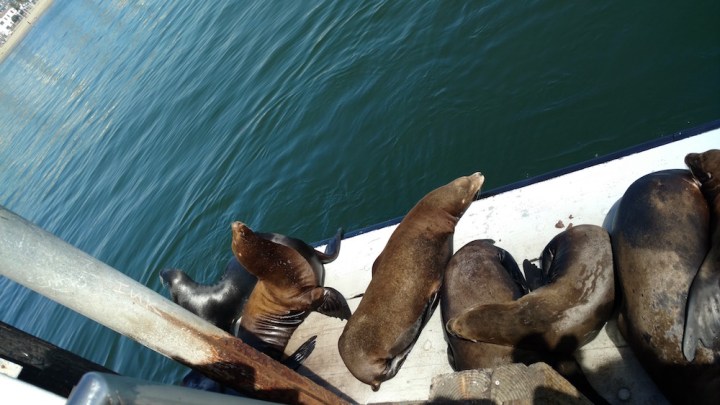
sealionwharf
Sea Lion Wharf

Life, the Ocean, and Earth

The Pacific Ocean is audible from our condo. Not blatantly so; it was a week before we realized what we were hearing. Not constantly; the sound is obscured by passing cars or planes, and sometimes disappears when the wind dies. It is a low susurration, a faint background. I would call it an infrasound, except that I can hear it. I do like to think of it as the communication of a very large living thing, much larger than a whale or an elephant.

The Pacific is very much a presence in our lives here, as we wished, but not in the ways we expected. We see it when we turn down the penultimate street coming home, on the way to the library, from some restaurant windows and decks, and from roads over higher terrain. We see indirect indicators of it as well: surfers and surf shops, the dolphin symbols on our storm drains, sea-themed door knockers and welcome mats , and ubiquitous sand.

What we did not expect was the personification. Working at home with the ocean as a background, I find myself called to visit it. On the days I don’t get there, I feel both slightly bereft and slightly guilty, as though I had slighted it by not showing up. My husband has only the Bay for most of his day, yet he feels the pull of the ocean as well, often proposing a visit after dinner, and seeming completely content on a bench or rock looking at the ocean, sans book or device.

The Pacific seems like a creature and also like a biologic indicator of an even larger creature, Earth. I found myself imagining the regular actions of waves and tides as akin to Earth’s pulse and breath so often that I did some investigation and discovered the Schumann resonance. The positively charged ionosphere and negatively-charged surface of the Earth create a waveguide for the electrical activity of lightning, which strikes somewhere on the planet 100 times per second. The resultant planet-enveloping wave has a frequency of about 7.8 Hertz, discovered by the aforementioned Schumann in the 1950s. Many biological phenomena have similar frequencies, including the alpha waves of the human brain.

I love to muse about the “big picture”, and here I find endless inspiration for such thoughts. Perhaps not quite Life, the Universe, and Everything, but close enough.

Cal Tech

My experiences with technology in California have been mixed. During the purchase process for our condo, all of the signing, including the final closing, was completed electronically, great for a long-distance purchase. Our documents, including the copious set for the homeowners association, are accessible online. I rate this Useful and Helpful.

One of my first west-coast-homeowner chores was to set up an account with PG&E. While waiting on hold, the robovoice informed me that this was easily accomplished with an app. True! I manage my account online, and we seem to have electricity, gas, and utility bills. I have never spoken to a PG&E employee, though I got a welcome message on vmail. Same assessment.

The Santa Cruz library system has an interlibrary loan setup very similar to that of the Middlesex Library Network, but their automated book checkout is quite different. You really have to see it–note the counter behind it, which gives a clue as to its size:

scpl-checkout

This machine is well-marked and fairly easy to use, and certainly gets points for appearance! It is identical to the Middlesex system in that the steps are to scan the library card barcode and the book barcode, ie, the same functionality in a larger space using more energy. I rate this A Step Too Far. Those who pay library fines by credit card may disagree.

If you need to go to the registry, make an appointment online. Sounds amazing, at least to Massachusetts residents, right? However, this only allows you to skip the intake line and receive the piece of paper that sorts you by transaction type; after that, the process is identical. So the main advantage is a smug feeling as you walk past the no-appointment intake line. That feeling disappears quickly when you realize these lines are served in turn by the same person, at least at the Capitola registry. I rate this Needs Improvement.

My husband’s quite small company leases three rooms on the ninth floor of a very modern building in downtown San Jose, and I got to visit it last weekend.

photos.google.com/…/AF1QipP8TvfFhmw53r13aFnk70lGbkKtJIdSvFRQW8FU

 Card swipes track every move of employees and their cars. To use the elevator bank, swipe the card to see a touchscreen display of the floors you may visit, which in his case are his company’s floor and the floor the gym is on. Touch the floor you want and the screen will direct you to a specific elevator, Elevator B in our case. Inside, there are no buttons; the doors close, and the elevator takes you to the selected floor. I’m sure corporate tenants feel this system offers comprehensive building security. For me, it inspired lively speculation about how to circumvent it. I rate this Big Brother’s Splashy Cocoon.

Extemporaneous Adventure

On Saturday we had planned to pick up a car in Sacramento, and we duly set off, but about a third of the way there, the dealer called to cancel. Our first thought was to turn around and go home. We have a lot to do. But happily it was a long way home, so we stopped and ate at San Pedro Square Market, a hopping indoor-outdoor restaurant collection with gourmet food and umbrellas for the unshaded tables. While dining under a tree with tiny, tiny flowers wafting down on us, we formulated a car acquisition plan, then turned our thoughts to what to do with our newly-free day.

Being the responsible workhorse-type people we are, chores were first in our minds, but the festive environment, good food, and pleasant atmosphere opened up our distractible sides. Could having this chore removed grant us some choreless time?

We decided to take a winding, back-roads drive home over the hill,  ending with a stop at Henry Cowell Redwoods State Park. I had visited HCRSP during our scouting visit in February, 2015, one afternoon while Bill was practicing violin. I was having a sunny, pine-scent-infused, worry-free stroll through huge trees until I heard a twig snap, leading me to wonder whether I could become prey. During this visit to the park, I was able to learn that while there are mountain lions, they only hunt at night.

Probably what I heard was a deer. We saw one grazing, then bounding away, and heard reports of a deer family wondering nearby. We also saw a sign alerting us to banana slugs. I grabbed a stick and stirred the ground cover eagerly, but remain sans slug sighting.

There was a bay tree, with piles of bay leaves on the ground underneath. We were able to crush handfuls to release their odor–which was amazingly refreshing. Addictive. I tried this at home with bay leaves from the spice rack, but it gets expensive quickly.

The main event is the giant trees, majestic and calming. Redwoods are especially nice because they grow in family circles, with the generations concentric, so when one dies it is surrounded by family. Several of these trees were over 1000 years old, so the family can be quite extensive.

I forgot to mention that one option for admission was to purchase a Golden Poppy annual pass, which was on our to-do list–so we finished a chore after all!


Happy Birthday?

This post may be a little dark, so I will start by listing recent positive events. I found a library 0.9 miles from my house, walked there, and got a book. We surprised an opossum* climbing one of the small trees in our back yard. I took a wharf tour and saw 4 egrets, 5 pelicans, and many, many sea lions. Two handymen returned my calls.

Today is my birthday, which each year seems more onerous. Yet I would describe the members of my nuclear family as healthy achievers blessed with friends and loved ones, who have the resources to do most of what we want to do.  I know this is a precious gift, that it could change, and that I have no cause for complaint. Many others, even some of our friends and family, have harsher outcomes or more limited choices.

Yet I will confess that I am not enjoying aging like I thought I would.

First is the fear. I don’t think of myself as fearful, yet I am getting painfully cautious with age. Why did it take almost 2 weeks for me to go on my first beach run? I was worried about falling, about traffic, even about getting lost (I don’t run with my phone, so I need landmarks). These fears aren’t unfounded, but they aren’t very serious. I find apprehension hampers me more often, that I have to prod myself to do some things I want to do.

Second is the physical infirmity. I drop things now; shall I film the sea lions and risk pitching my phone into the drink? I stumble on air, or lose my balance when my ankle “gives”. A couple of times, I have fallen flat on the ground without provocation, not as a faint, not due to tripping. In addition to the clumsiness, my eyesight is worse, especially evident when moving between light and dark, or perusing small print. My muscles are weaker, especially in my hands.

Then there are the cognitive issues. I struggle to find a word, or to remember an author. I am easily distracted, as in, Why did I come into this room? It seems harder for me to learn new things, like what all the emojis mean, or Spanish. And lastly, the general onset of the darkness. We can’t predict the future, but I am pretty certain my life is more than half over.

This may sound drastic, but even if you haven’t seen me in a decade, you might not notice the difference. I try to stay positive, keep moving, do new things, and not think about the effects of aging. Except for this one day of the year, and just between us.

*The North American version of this animal is correctly styled “opossum”, with pronunciation of the first letter optional. Since the writer does not know which version the reader will choose, the article matches the spelling. Grammar geeks may argue this (tirelessly).

The Communal State

Today I went for my first run since moving to California. I ran to Capitola Beach and back, which is mostly not oceanside running since the shore around Opal Cliffs is for members-only. This surprised me, because of the Coastal Act, under which the sand “below the mean tide line” in the entire state is “held for the public.” Essentially, people have the right to be on sand that’s wet or damp.

This is one of the charming features that inspired the moniker in my title. As we bump up against these communal features, my husband and I have started to say, That’s California.

This morning I had to “tread track” for a short distance on encountering a phalanx of 30-or-so strollers. One of the volunteers explained that there are exercise opportunities specifically for stroller-bound parents offered 9 times a week in 3 neighborhoods, and participants drive in from all over the region. As I ran back, they were singing kiddie songs on the wharf.

The handbook to study for the driving test (yes, we both passed) is revelatory, filled with exhortations to think about your environment and those around you and to drive accordingly. I can’t quite say there are no rules, but a lot of them are contextual–including speed limits. Pedestrians always have right of way. One should never drive between a bike or pedestrian and a moving car, and people don’t.

After checking out at the local New Leaf grocery, I was offered a 10¢ voucher for each of my reusable bags. These I redeemed at the exit, where I found receptacles for six local non-profits, along with a tally of how much each had garnered the previous day.

We both joined the website Nextdoor, which is nationwide but seems more popular here than on the East coast. The current discussion is what to do about Slug Invasion. It happens overnight apparently, although sometimes a laggard slug may greet you for breakfast. In case you ever encounter this problem, it’s readily solved by tracking the slug trails back to their entry points and blocking those with copper tape or epoxy.

Back to the wet sand rule. As it turns out, anyone can get Opal Cliffs shoreline access for an annual fee, $50 for residents and $100 for nonresidents. The money is used for maintenance, and I can attest that the entrance is very attractive, with plantings and benches. During a conversation with a couple of fellows at the gate, I perceived some angst associated with the existence of the gate and having to pay.  One of them proposed a sliding scale based on the weather. There is no weather here!

Sliding Down the Learning Curve

In the past few months I have learned a lot about packing, shipping, movers, and unpacking. Were I to write a book about my experiences, the chapters might include, Why You Will Later Decide to Discard Items You Pack First; The Art and Folly of Labeling Moving Boxes; Where’s My Drill?; and Unpacking: A Scavenger Hunt You Won’t Win. But I’m not going to write a book about this. If my life goes as planned, everything I learned here will never be useful to me again.

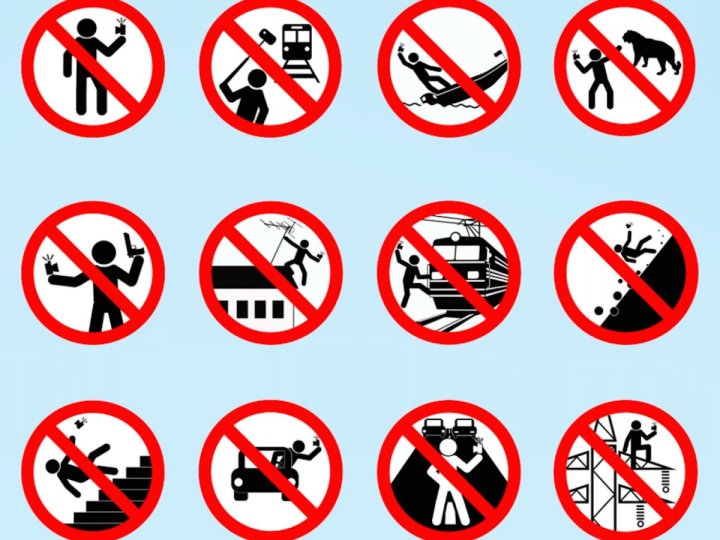
This led me to think about other activities people pursue that have little chance of increasing our knowledge. Everyone expects to plan just one wedding, and even those of us who exceeded our limit generally got just one of the white veil, bevy of attendants, bouquet-throwing variety. Some people only buy one house or choose one dog. Veering to the dark side, I notice that death by selfie fits this category, though others may learn from it.*

But why do we want to build up expertise anyway? Spending all our time doing things we know how to do well, or learning to do other things well so we can do them more,  is the opposite of creativity. While some structure is necessary to launch creative exploration, too often we stick with what we know, which stifles creativity and leads us to more habitual lives, lives which, while cozy, are hardly wellsprings of vigor, or growth, or innovation.

My husband and I packed our worldly goods just once, moved them across the country, and walked away from that. Now the trick will be, will we set up our old habits here, or will this new place spark personal rebirth? I’ll try to take my own advice, just as soon as I finish unpacking.

*

russian-selfie-guide